An ecosystem is a system of living and nonliving parts working together.
📋 NGSS Standard: 5-LS2-1 — Develop a model to describe the movement of matter among plants, animals, decomposers, and the environment.
🎯 Learning Objective
Students will describe an ecosystem as living and nonliving parts interacting together.
💡 The Big Idea
An ecosystem is not just a place with living things. It is a system where organisms and their environment affect one another.
🔬 The Science
Science Snapshot
An ecosystem is more than a collection of things; it is a web of interactions.
What is happening?
An ecosystem is a system of living things and nonliving parts that interact. Plants, animals, fungi, water, air, rocks, light, and temperature all matter because each one changes what the others can do.
Why it works that way
Scientists study ecosystems by tracing relationships. They ask where energy enters, how organisms get what they need, where matter goes when organisms die, and how conditions such as water or sunlight limit life.
Look for this in the lesson
Students should move beyond listing objects in a place. The stronger scientific explanation shows at least one relationship: an organism using shelter, sunlight helping a plant grow, or water shaping what can live there.
Ask while you read: Which living and nonliving parts in this ecosystem depend on one another?
🖼️ Ecosystem Study Cards
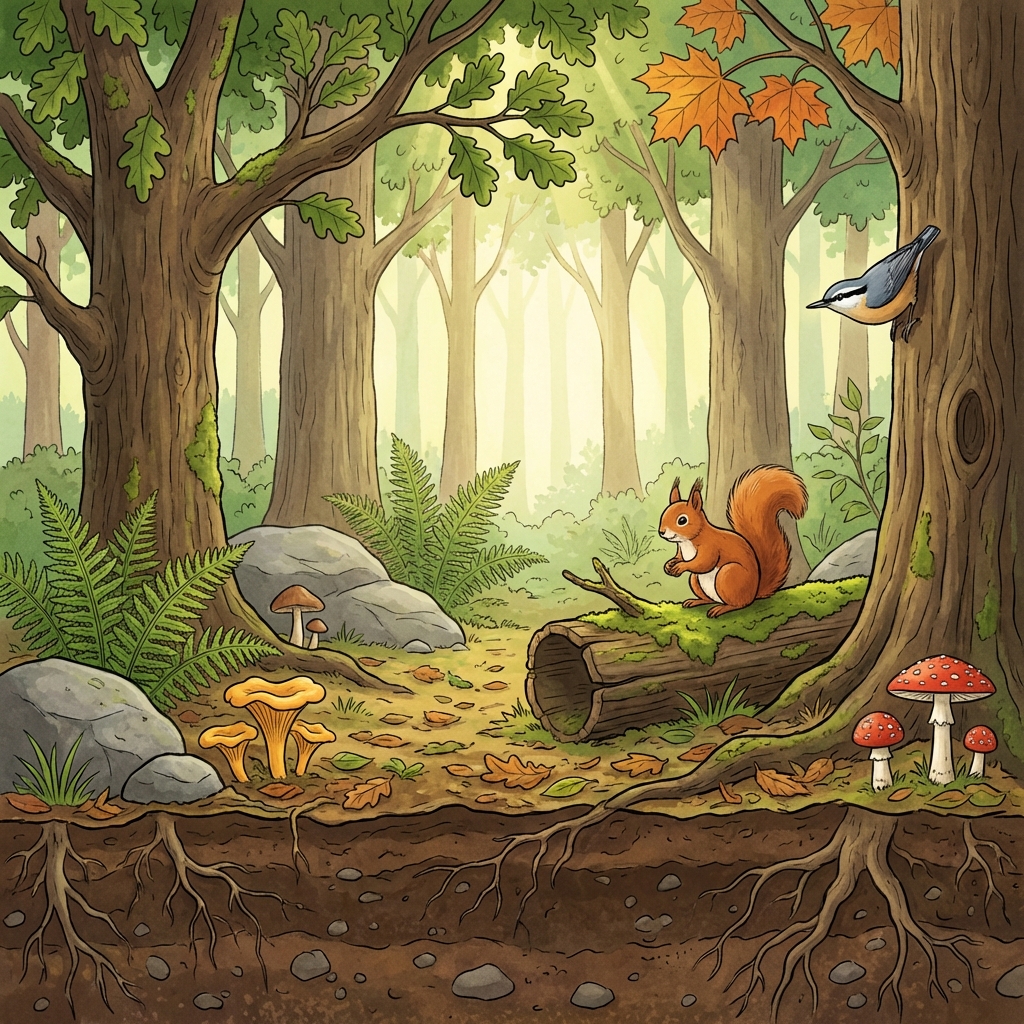
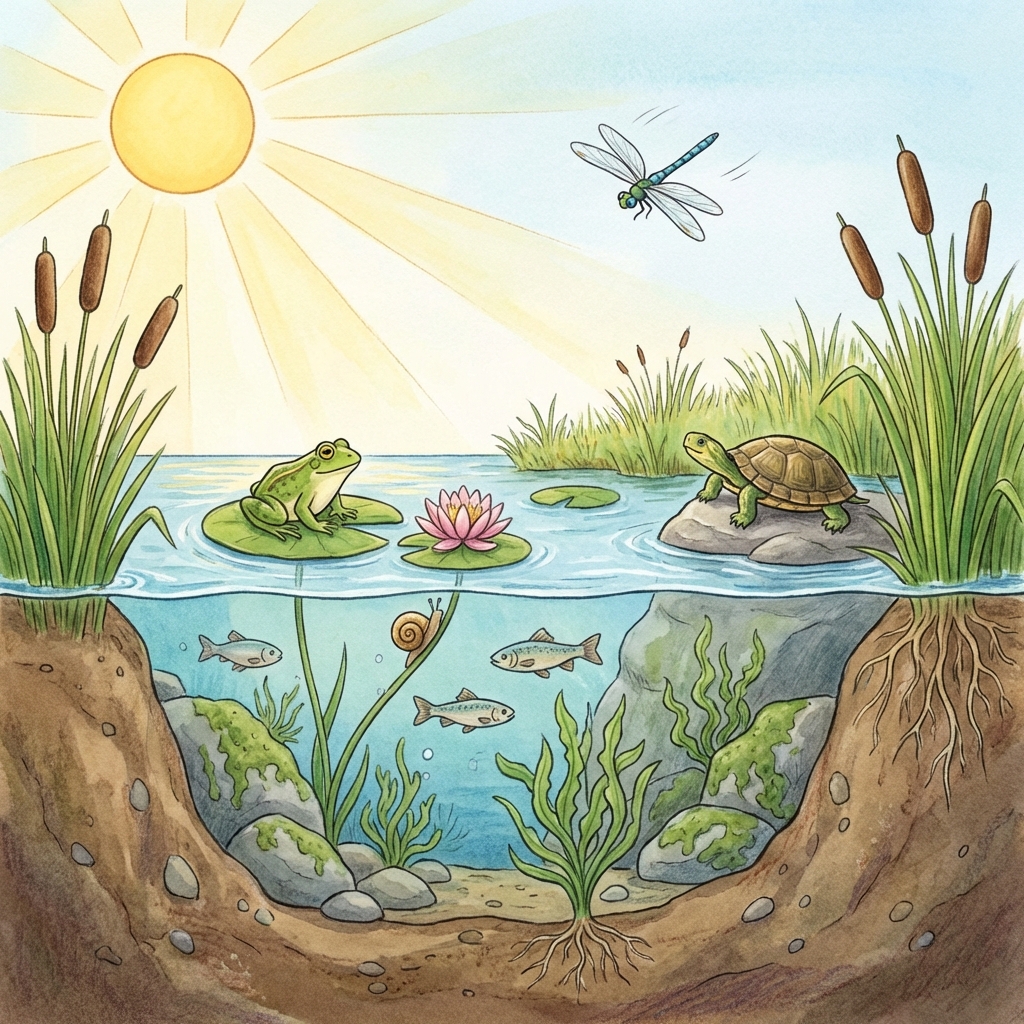
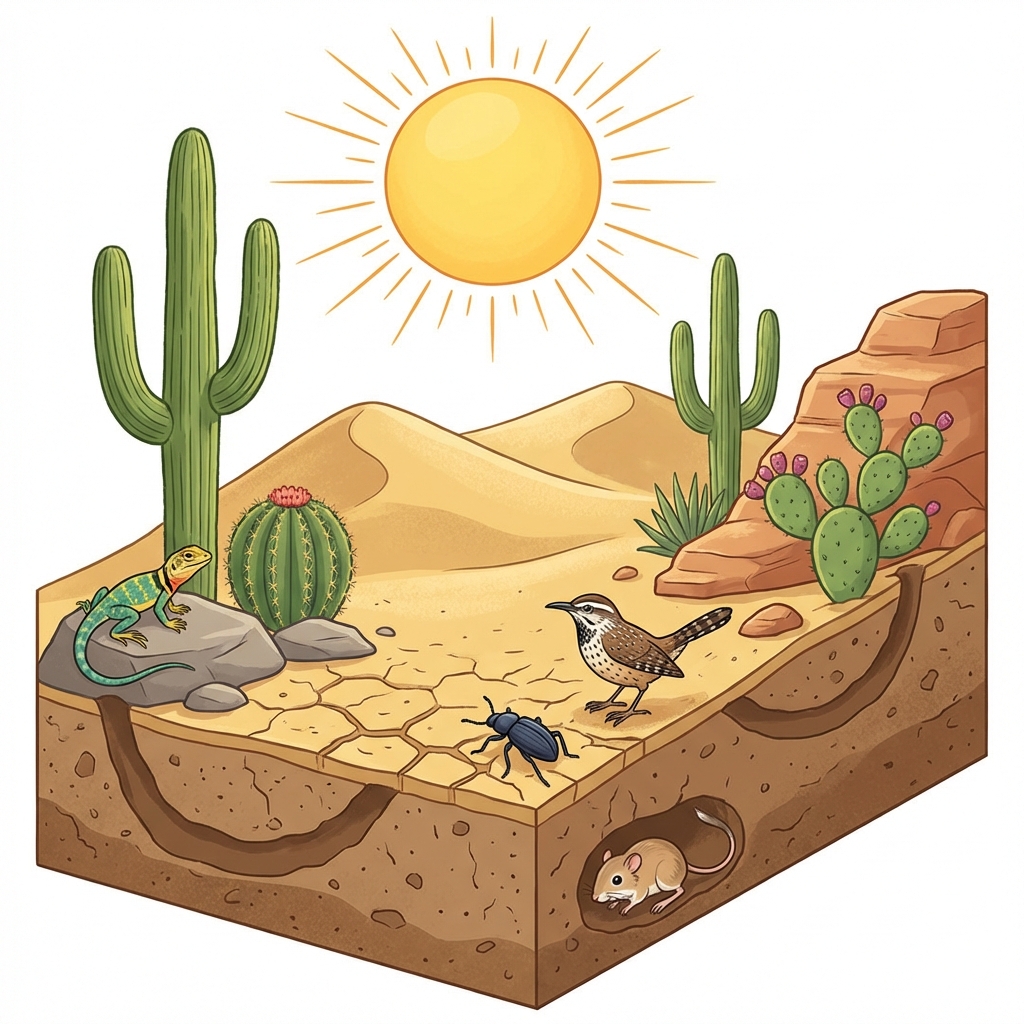
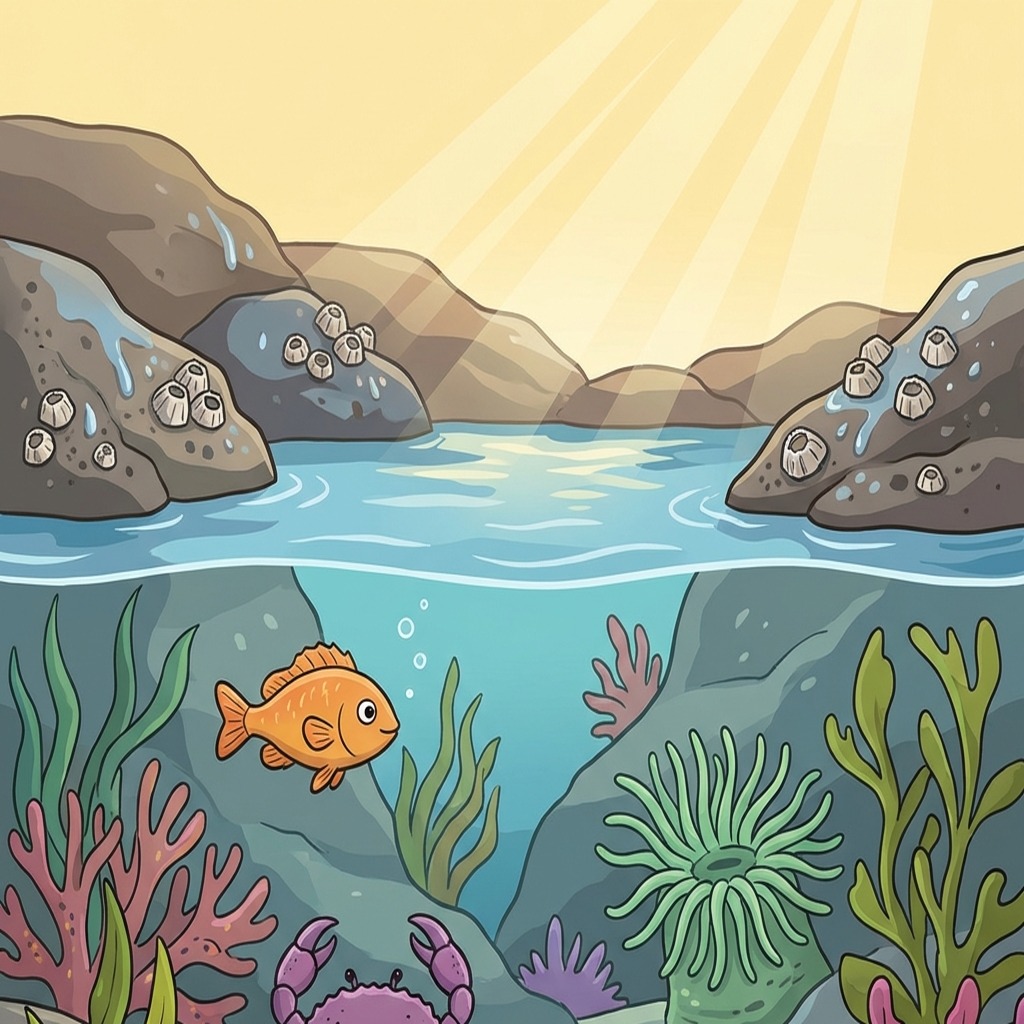
Use these four ecosystem cards as the main observation source for this lesson. They give students real scenes to study instead of asking them to guess from a manicured backyard.
Forest ecosystem card
Look for trees, fungi, animals, rocks, soil, shade, and sunlight.
Pond ecosystem card
Look for plants, animals, water, mud, sunlight, and shelter at the pond edge.
Desert ecosystem card
Look for cacti, animals, sand, rocks, sunlight, and places to hide from heat.
Tide pool ecosystem card
Look for seaweed, animals, salt water, rocks, shallow pools, and changing light.
📦 Materials
🏠 Household Items to Gather
Printed ecosystem study cards from this lesson or the lesson page on a screen
Notebook or worksheet
Colored pencils
📋 Printables
Student worksheet page from this lesson
Four ecosystem study cards on this page
🧪 Investigation
Step 1 — Sort specific ecosystem components from one ecosystem card (10 min) Choose one ecosystem study card and sort what you actually notice into three buckets: living parts, nonliving parts, and interactions. For example, on the pond card a frog and cattails are living parts, water and mud are nonliving parts, and a frog hiding among plants is an interaction.
Step 2 — Use the card to find interactions (10 min) Stay with the same ecosystem card and list at least three interactions you can point to on the card. Example: a squirrel uses a tree for shelter, pond plants grow in water and sunlight, or a tide pool crab depends on wet rocks and seawater. Reference the card as you talk instead of drawing a new picture here.
✏️ Model-planning help before students draw
Ecosystems they could draw: forest, pond, desert, or tide pool
Helpful labels to include: sunlight, water, soil, rocks, plants, animal names, shelter, and arrows showing one interaction
Step 3 — Build the model (10 min) Students sketch one ecosystem model with labels. Give concrete examples of labels such as sunlight, water, rocks, soil, oak tree, frog, cactus, or seaweed. They may draw any of these ecosystems: forest, pond, desert, or tide pool.
Step 4 — Explain one interaction (10 min) Choose one organism from the model and describe how it depends on the environment.
Step 5 — Share the system idea (10 min) Students explain why the ecosystem works as a system, not as separate pieces.
💬 Discussion Questions
Why is sunlight part of an ecosystem even though it is not alive?Nonliving parts still affect living things.
How do living and nonliving parts interact?Plants, animals, and fungi depend on water, air, soil, and light.
Why is an ecosystem called a system?The parts affect one another.
🚀 Extensions
Extension: Compare two ecosystems, such as pond and desert, and list what is the same and different.
👩🏫 Parent/Teacher Notes
Teaching move: Push students beyond naming objects. Ask how the parts are connected.
Choose the forest, pond, desert, or tide pool card. Write at least three living parts, three nonliving parts, and one interaction you can point to on that card.
Living parts
Nonliving parts
How they interact
2️⃣ My ecosystem model
Draw a forest, pond, desert, or tide pool ecosystem. Helpful labels you could include: sunlight, water, soil, rocks, plant names, animal names, shelter, and arrows showing one interaction.
🔑 PARENT ANSWER KEY — Detach before giving worksheet to students
Sample Thinking
Plants need sunlight, water, and soil. Animals need food, water, and shelter. These interactions make the ecosystem a connected system.
Sample ecosystem choices and labels
Accept a forest, pond, desert, or tide pool model. Strong labels may include sunlight, water, soil, sand, rocks, seaweed, cactus, frog, fish, bird, shelter, or arrows showing one interaction.
✅ What Success Looks Like
Student includes both living and nonliving parts.
Student uses one ecosystem card as evidence and can name what was actually visible there.
Student shows at least one real interaction.
Student includes concrete labels on the model instead of leaving the drawing unlabeled.
Student uses the word system accurately.
🥼
This is a preview. Unlock the full lesson.
You're seeing a preview. Full-library access is not live yet. For now, browse the live store products and free sample lessons while the larger subscription offer stays in Coming Soon. Live now: free samples + Kitchen Chemistry.