📚 Grade: 1st Grade⏱️ Duration: 45 minutes🔬 Subject: Life Science — Animal Structures📖 Lesson: 5 of 6
🦅🐘🐜🦆🦒
Every animal has a specialized tool kit for getting food — no two are exactly alike!
📋 NGSS Standard: 1-LS1-1 — Use materials to design a solution to a human problem by mimicking how plants and/or animals use their external parts to help them survive, grow, and meet their needs.
🎯 Learning Objective
Students will match animal body structures to their food-getting function and explain why each structure suits that specific diet.
💡 The Big Idea
An animal's body parts are perfectly matched to what it eats. A meat-eater has different tools than a plant-eater. A filter-feeder has different tools than a seed-cracker. Over millions of years, animals with the best-matched body parts for their food source survived and passed on those features. The result: an amazing variety of specialized eating tools — beaks, tongues, trunks, claws, bills, and more!
Optional household items for a "beak challenge" extension: tweezers (eagle beak), a spatula (duck bill), a toothpick or straw (anteater tongue), a spoon (scooping/filter feeding) — and things to pick up: small marshmallows, rice, water with floating bits
✅ Core lesson needs only paper and crayons. The kitchen challenge is a fun bonus!
🔬 Part 1 — Six Amazing Food-Getting Structures (15 min)
Study each animal and its specialized body part. Ask: "How does this body part help the animal get its specific food?"
Eagle
Talons + hooked beak
Talons (curved, sharp claws) grip and hold prey tightly — even a struggling fish can't escape. The hooked beak tears meat into pieces small enough to swallow. Eagles can see 4–8 times more sharply than humans, which helps them spot prey from far away.
🍖 Eats: fish, rabbits, squirrels, snakes
Elephant
Trunk (elongated nose + upper lip)
The trunk can reach high branches no other land animal can access, strip bark from trees, suck up water (holds up to 2 gallons!), and use delicate tip muscles to pick up a single berry. It's a snorkel, a hand, a drinking straw, and a hose all in one.
🌿 Eats: leaves, fruit, bark, grass — up to 300 lbs per day!
Giant Anteater
Long snout + long, sticky tongue
The narrow snout pokes into termite mounds too small for predators to reach. The tongue (up to 24 inches long!) is covered in sticky saliva and flicks in and out up to 160 times per minute, collecting thousands of termites per visit.
🐛 Eats: up to 35,000 ants and termites per day
Duck
Flat bill with comb-like edges (lamellae)
The flat bill scoops water. Tiny comb-like structures called lamellae along the bill's edge act like a strainer — water squirts out but small plants, seeds, and invertebrates stay trapped inside. This is called filter feeding.
🌊 Eats: aquatic plants, small invertebrates, seeds
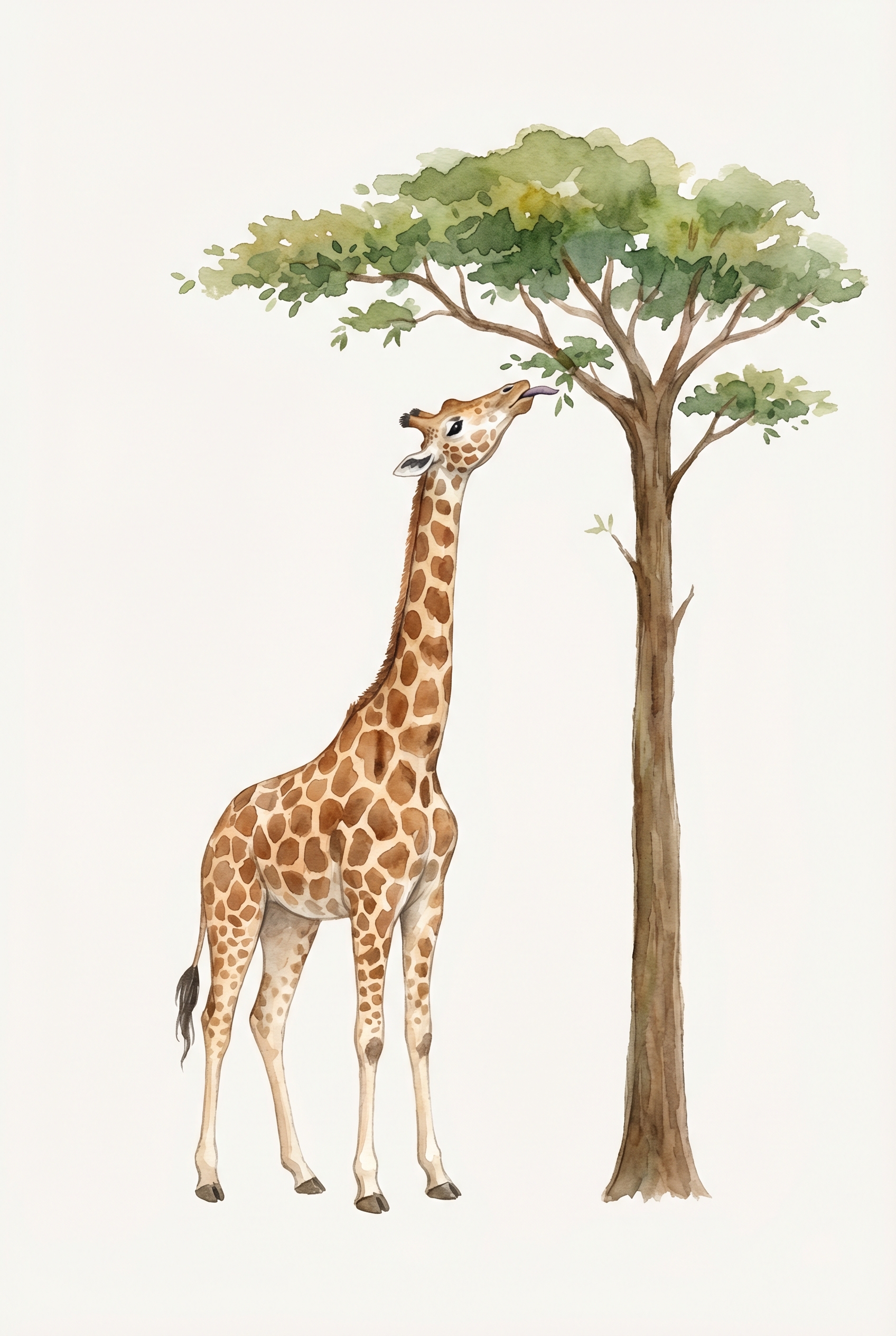
Giraffe
Long neck + prehensile lips and tongue
The long neck reaches leaves 18 feet off the ground — higher than any other browsing animal. The prehensile lips and tongue (up to 18 inches long, dark blue to resist sunburn!) wrap around thorny acacia branches and strip the leaves clean.
🌳 Eats: acacia leaves that are toxic to most animals (giraffes tolerate the toxins)
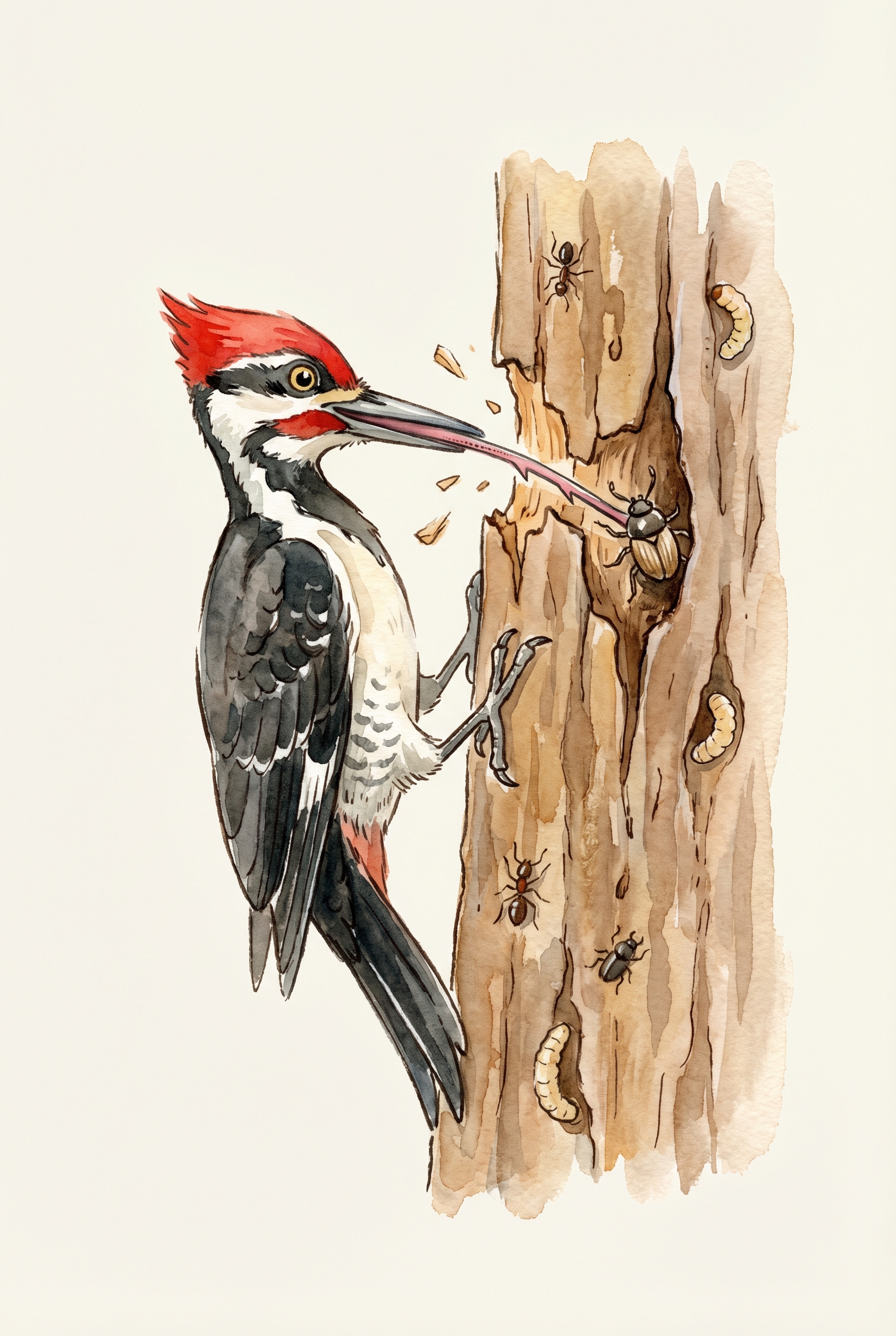
Woodpecker
Chisel beak + long barbed tongue
The chisel beak hammers into tree bark to expose insect tunnels — at up to 20 pecks per second! The barbed, sticky tongue (so long it wraps around the skull!) reaches into the tunnel to extract insects. The skull has special shock-absorbing structures to prevent brain injury from all that pecking.
🪲 Eats: wood-boring beetles, ants, and tree sap
Discussion during Part 1:
"Could an eagle eat like a duck? Could a duck eat like an eagle? Why not?"
"Which animal has the most impressive food-getting structure? Why?"
"What tool do YOU use to eat? (Fork, spoon, fingers, teeth) — how do those compare to animal tools?"
🏗️ Part 2 — Draw an Animal Eating (15 min)
🎨 Drawing Challenge: Show How It Eats!
Pick one animal from above. Draw a scene showing that animal using its specialized body part to get its food. Your drawing must show:
The animal
The specific body structure being used (beak, trunk, tongue, etc.)
The food being obtained
At least one label explaining how the structure helps
💬 Discussion Question
🗣️ Big Question: "If a woodpecker's beak broke, what would happen?"
Suggested answer: The woodpecker would likely starve, because its entire feeding strategy depends on that specialized beak. This is the risk of overspecialization — an animal with a very specific tool for a very specific food is in serious trouble if that tool breaks or that food disappears. The giant panda is a famous example: it eats almost nothing but bamboo, and its "thumb" (actually an enlarged wrist bone) evolved specifically for holding bamboo stalks. If bamboo disappears from a region — which can happen when bamboo forests die — pandas starve. More generalist animals like raccoons, crows, and humans can eat almost anything and are much more adaptable when food sources change. Specialization is a tradeoff: you become very good at one thing, but vulnerable if that one thing is threatened.
🚀 Extensions
🥄 Beak Challenge (Kitchen Science): Set up "food sources" — rice in water (duck filtering), marshmallows to skewer (eagle gripping), small objects in a hole in a foam cup (anteater extracting). Try each with tweezers (eagle), a spatula (duck), and a straw or toothpick (anteater). Which tool is best for each food?
🦒 Giraffe's Secret: Acacia thorns are up to 3 inches long — yet giraffes eat them! Their leathery lips and long tongue navigate between thorns. Look up a video of a giraffe eating to see this in action.
🐦 Woodpecker Skull: Search "woodpecker skull shock absorbers" — the skull has a spongy bone structure, a thick beak base, and the tongue literally wraps around the skull to cushion impact. A remarkable structural solution!
📚 Read Aloud:"What Do You Do With a Tail Like This?" by Steve Jenkins (features many food-getting structures!)
🌿 Generalist vs. Specialist: Compare what a raccoon can eat vs. what a koala can eat (only specific eucalyptus leaves). Which would survive better if their environment changed? Discuss the tradeoffs.
👩🏫 Parent/Teacher Notes
The woodpecker discussion: The overspecialization concept is sophisticated but accessible. The core idea for Grade 1: "Being really good at one thing means you depend on that one thing." You can connect it to human specialization too — a surgeon is very specialized; a general doctor sees many things. What are the tradeoffs?
Elephant trunk science: An elephant's trunk has about 40,000 muscles (humans have about 600 total). It can pick up a log weighing 700 lbs or pick a single blade of grass. It can suck up 2 gallons of water and squirt it into the mouth — or use it as a snorkel when swimming. It's one of the most versatile body parts in the animal kingdom.
Anteater tongue detail: Anteaters have no teeth at all. They swallow small stones along with their insect prey — the stones grind up the insects in their stomach. The tongue itself produces so much saliva it runs down the snout in streams.
Duck lamellae: The comb-like lamellae along a duck's bill are analogous to baleen whale plates — both are filter-feeding structures at very different scales. This is a beautiful example of convergent evolution (different animals evolving similar solutions).
Kitchen beak challenge tip: This works wonderfully with: tweezers = eagle/heron (gripping fish), spoon = duck (scooping), straw or long toothpick = anteater (probing), clothespin = parrot (cracking seeds). Use rice, small marshmallows, dried beans, and a bowl of water as your "food sources."
Giraffe toxin tolerance: Acacia leaves contain tannins that are unpleasant or toxic to most herbivores. Giraffes have evolved tolerance to these toxins — another example of co-evolution between animal and food source.
🐦 Woodpecker chisel beak → Drill into tree bark to find insects
💡 Part 3 — Think About It!
The woodpecker would likely starve
Its entire feeding method depends on its beak — no beak means no way to reach its food
Accept: "it couldn't get into trees to eat" or "its food would be gone"
Bonus: student connects this to overspecialization risk
Part 2 — Drawing Challenge — What to Look For
Drawing clearly shows the animal's specialized structure being used
Food source is depicted or described
Labels identify the body part and the food
Student can verbally explain how the structure helps
✅ What Success Looks Like
Student correctly matches all 6 animal structures to their food functions
Student understands: each structure is suited to a specific food source
Student can explain the woodpecker answer: specialized tool = dependent on specific food
Bonus: student can explain what "overspecialization" means and give an example (panda)
💡 Vocabulary bonus: The word prehensile means able to grasp or hold. Giraffes have prehensile lips and tongue. Monkeys have prehensile tails. Elephants have a prehensile trunk. See if your student can think of other prehensile body parts! (Your own hands are prehensile — you can wrap your fingers around objects.)

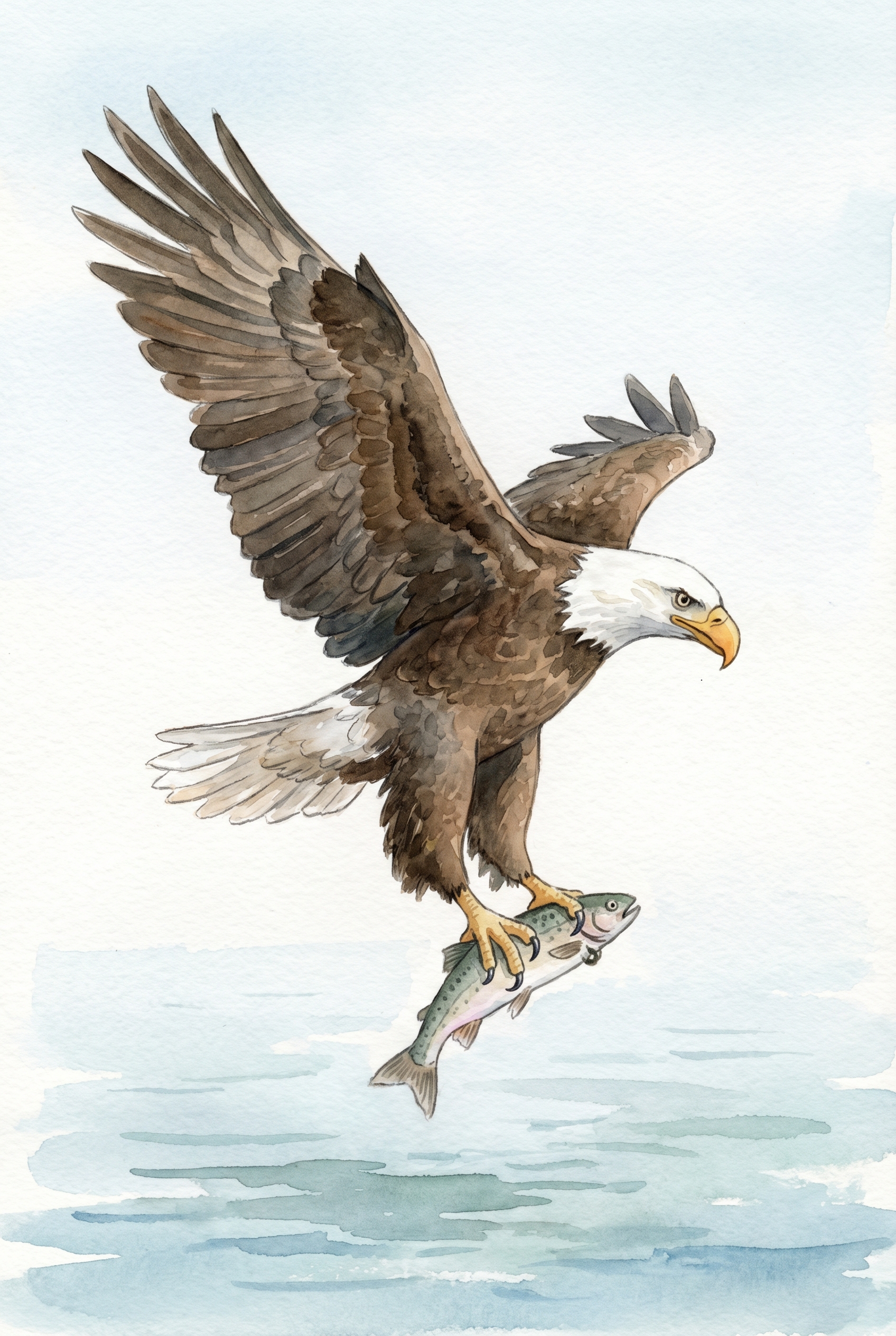 Eagle
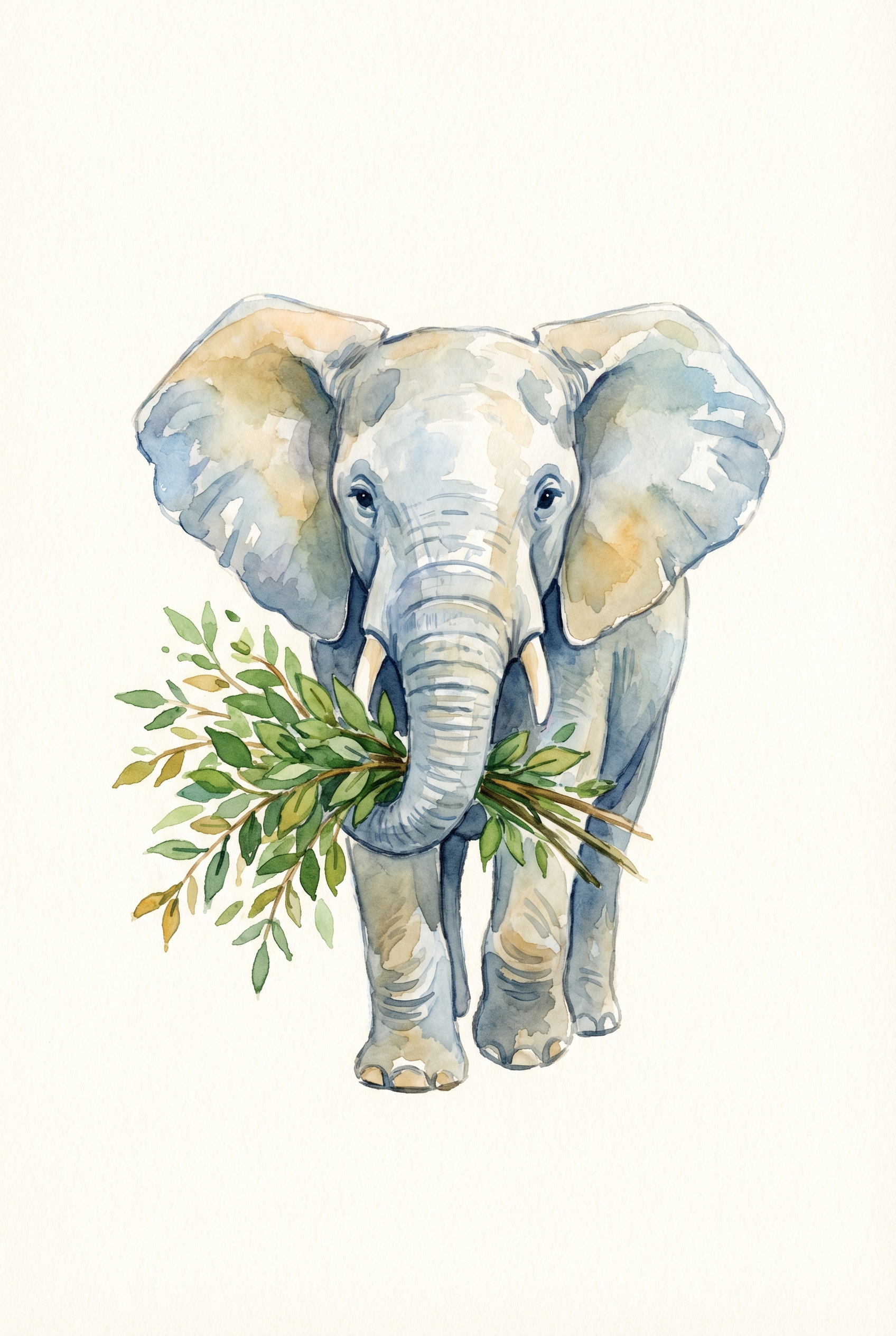 Elephant
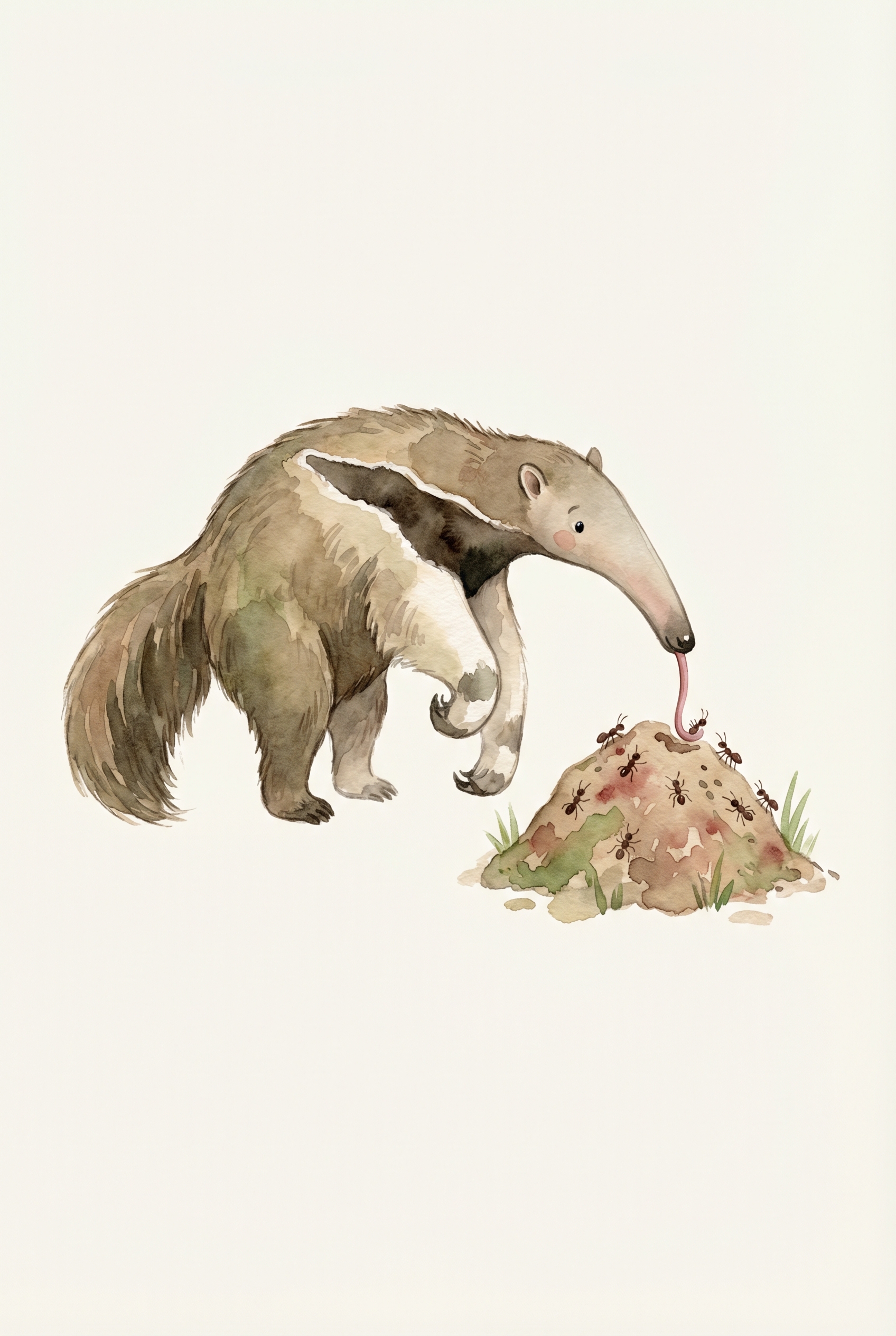 Giant Anteater
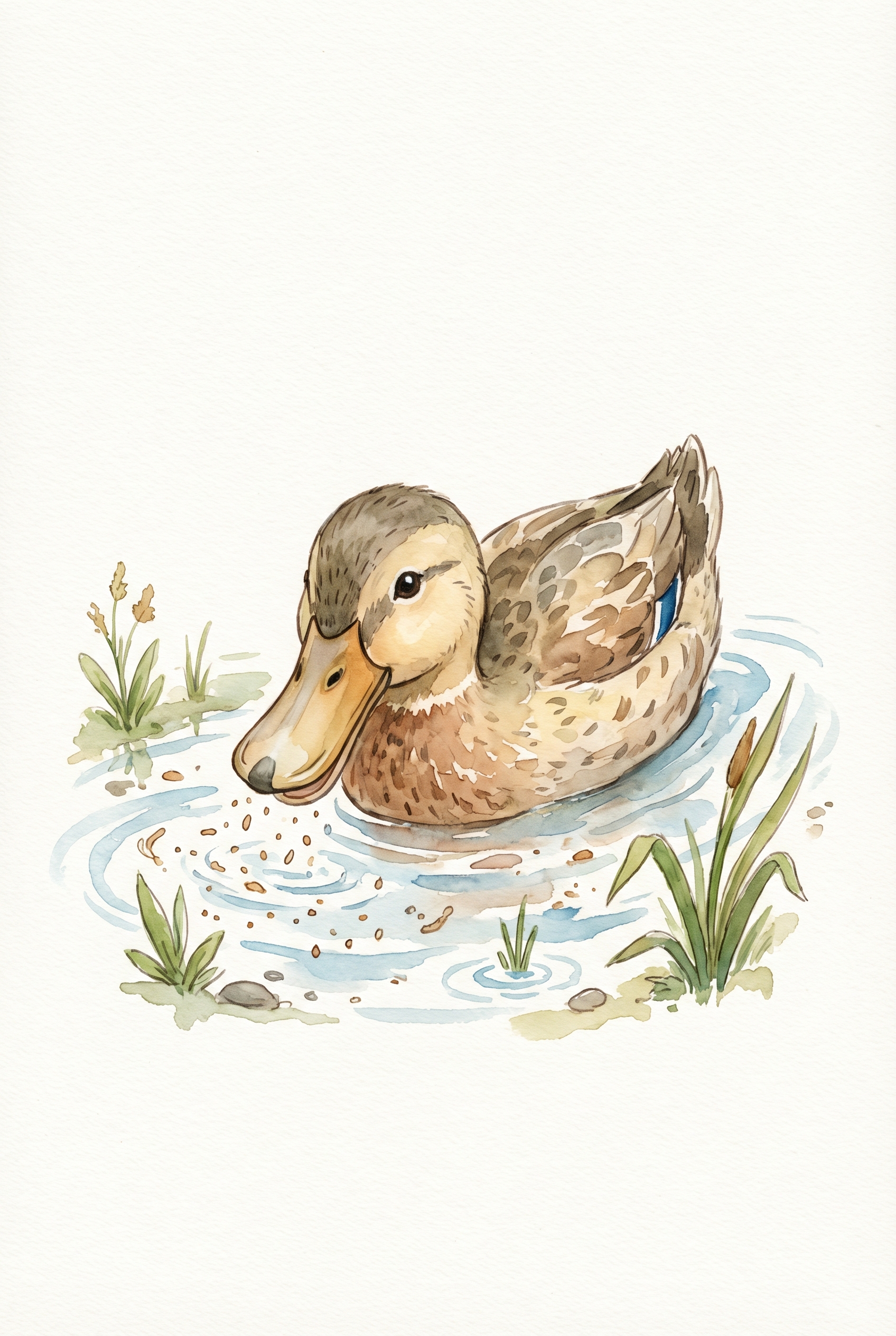 Duck
 Giraffe
 Woodpecker