Every star you see at night is a sun — just unimaginably far away
📋 NGSS Standard:1-ESS1-1 — Use observations of the sun, moon, and stars to describe patterns that can be predicted.
🎯 Learning Objectives
By the end of this lesson, students will be able to:
Explain why stars are only visible at night (and why the sun makes them invisible during the day)
Describe observable patterns of stars in the sky, including recognizable groupings
Identify the Big Dipper and three other common star patterns using picture cards and a simple star chart
🔬 The Big Science Idea
Here's a surprising fact: stars are shining in the sky right now — even during the day! We just can't see them because our sun is so bright it outshines everything else. When the sun sets and the sky darkens, the stars become visible again — it's like turning off a bright light in a room and suddenly being able to see the stars painted on the ceiling.
Every single star you see is a sun — some smaller and dimmer than ours, many far larger and brighter. They only look tiny and faint because they are unimaginably far away. The closest star besides our sun (Proxima Centauri) is so far that traveling to it at the speed of an airplane would take about 4 million years.
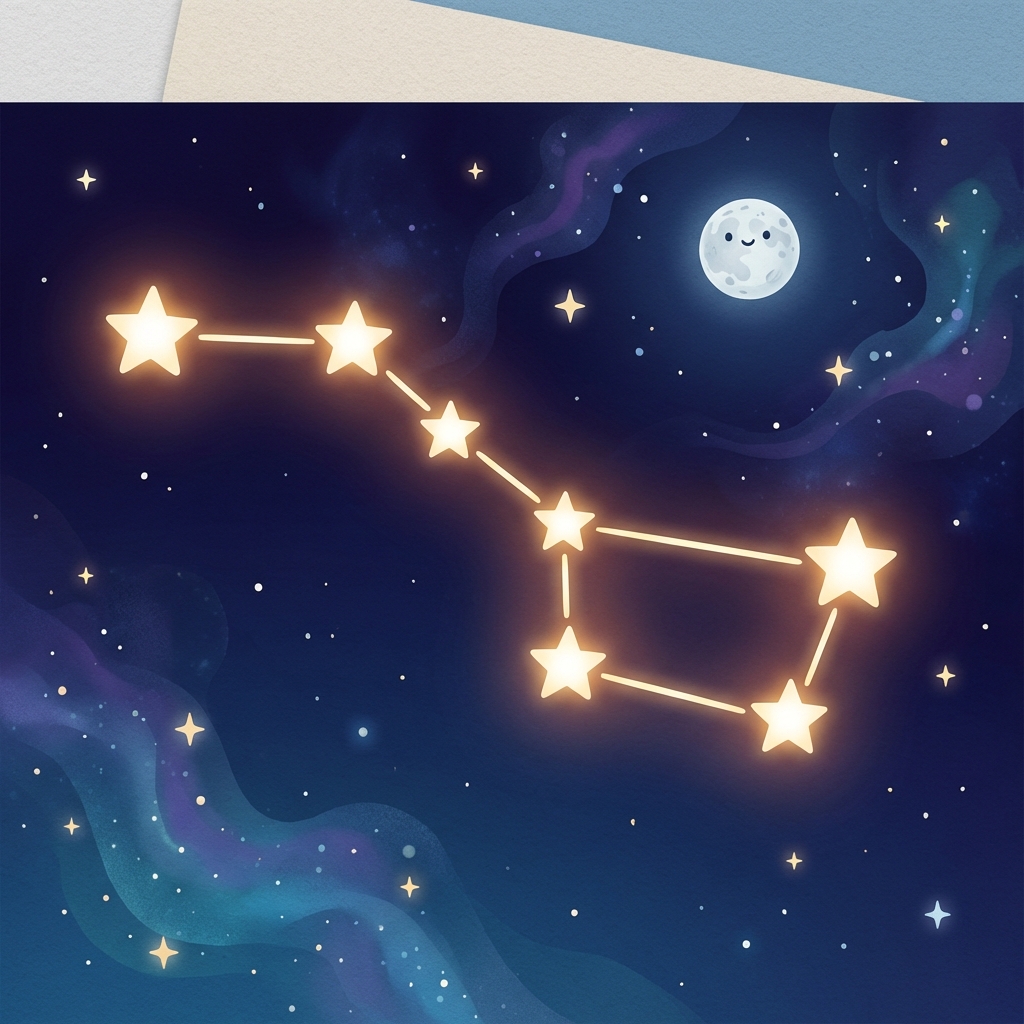
Even though stars seem scattered randomly, some form recognizable patterns called constellations and asterisms. The Big Dipper is one of the most reliable and easiest to find — like a ladle or a dipper scoop shape in the northern sky.
💡 Key vocabulary: star, constellation, asterism, Big Dipper, light-year, visible, atmosphere, night sky
📦 Materials
🏠 What You'll Need
A flashlight
A bright room (normal room lighting)
A dark room or closet
This lesson's constellation picture cards and tracing worksheet
Crayons or pencil
For bonus nighttime activity: a clear night, your yard or a window, and the Big Dipper star chart to find the real thing!
🔬 The Flashlight Experiment — Why Can't We See Stars During the Day?
🔦 What You Need
A flashlight and two different rooms: one bright, one dark.
Step 1 — The Bright Room Test
Turn on the flashlight in a normally lit room (lights on, sunshine through windows). Point it at the wall. Can you see its beam? Can you clearly see its light on the wall? Ask: "Is the flashlight on?" Yes, but it's hard to notice because the room is already bright.
Step 2 — The Dark Room Test
Move to a dark room — close the curtains, turn off the lights. (A closet works great!) Turn on the same flashlight and point it at the wall. Wow — now it's very easy to see! Ask: "Did the flashlight get brighter?" No! The flashlight is the same. The difference is the darkness around it.
Step 3 — Connect It to Stars
Explain: Stars are like that flashlight. They're always shining. But during the day, our sun is so incredibly bright that it lights up the whole sky — just like the bright room made the flashlight hard to see. At night, the sun is on the other side of Earth, so the sky gets dark — just like the dark room — and suddenly all those flashlights (stars) become visible!
Step 4 — Spot Four Constellations (Nighttime Activity)
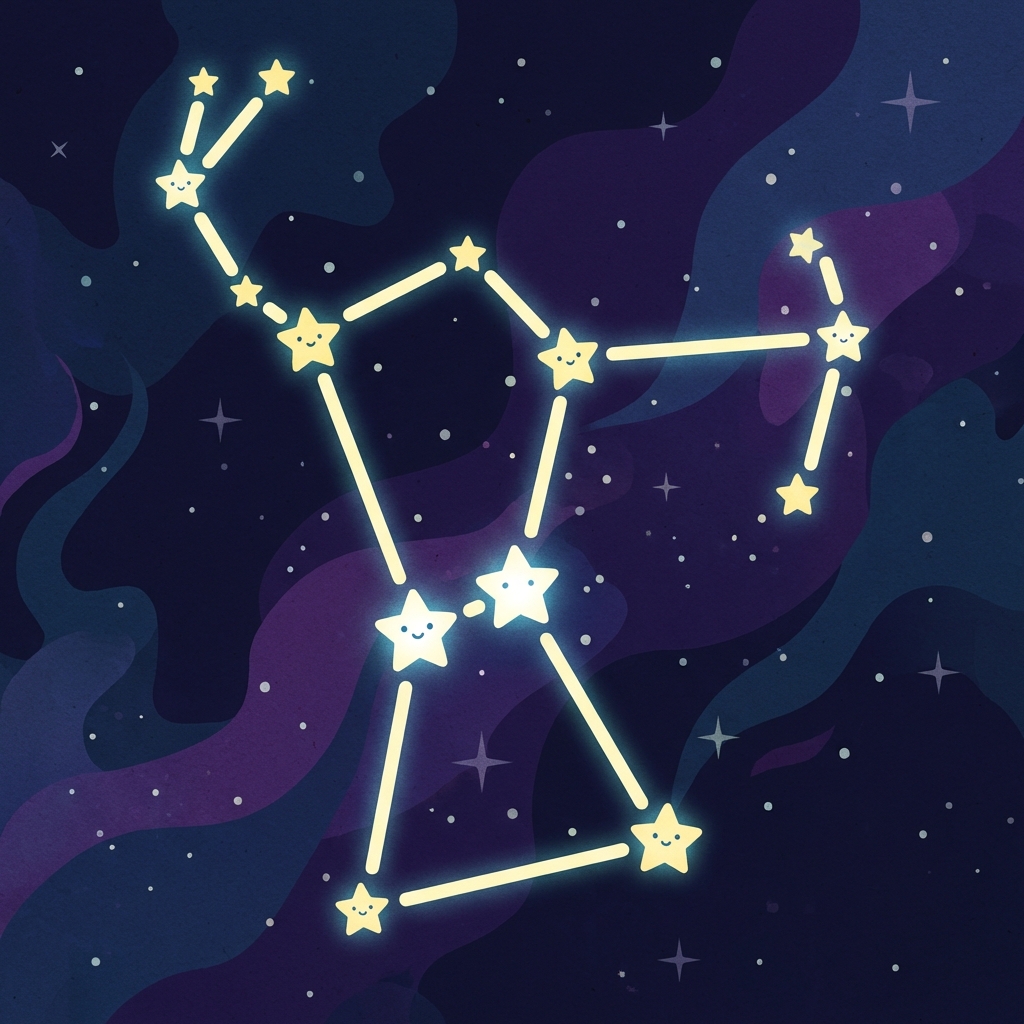
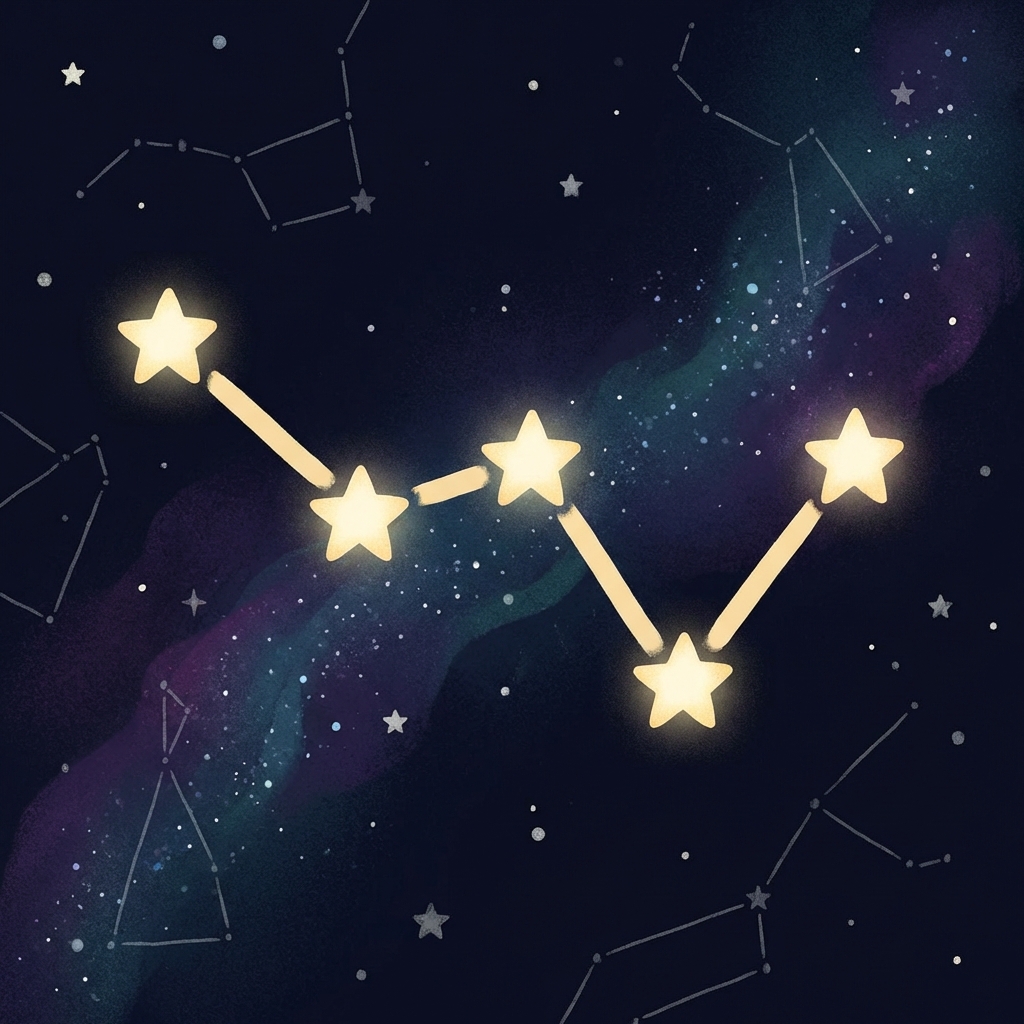
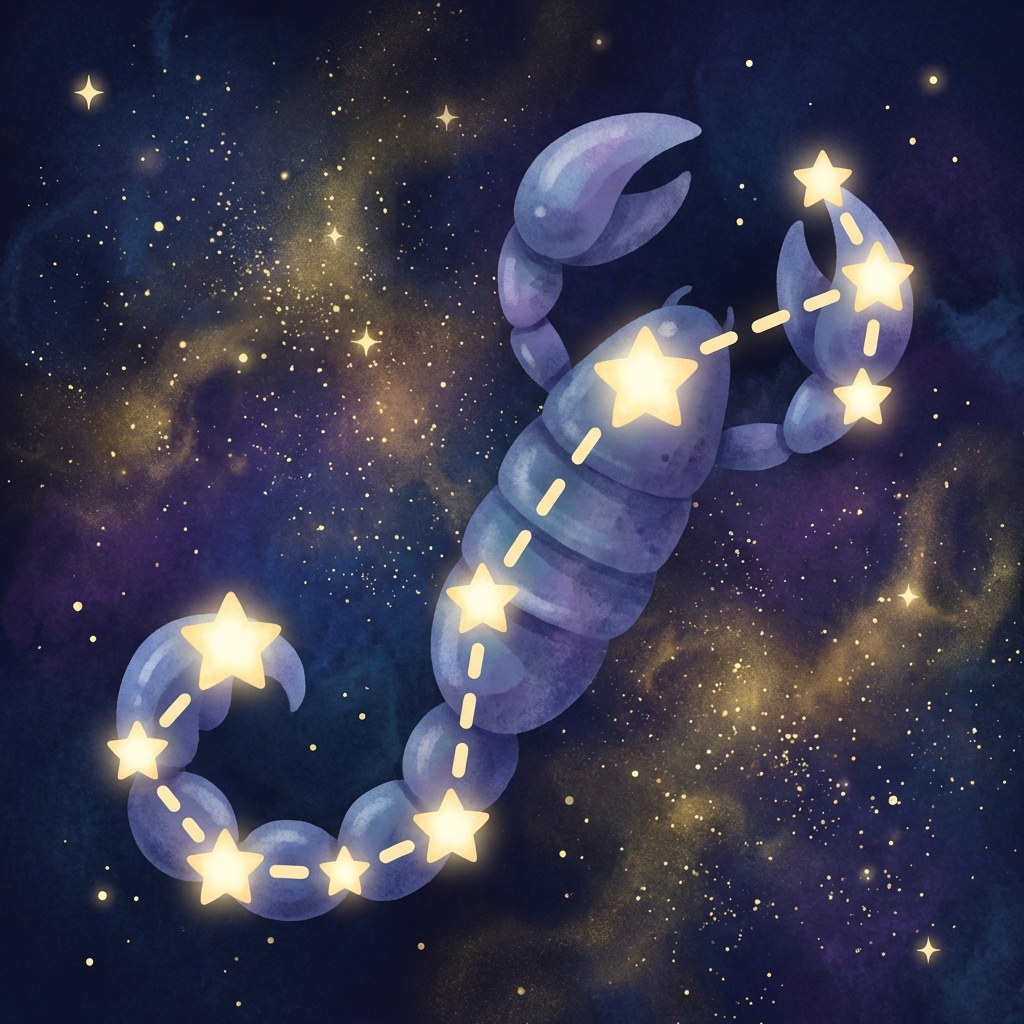
On a clear night, take the constellation cards outside and try to spot all four patterns over time: the Big Dipper, Orion, Cassiopeia, and Scorpius. Start by matching what you see in the sky to the card pictures. Some constellations are easier in different seasons, so treat this as an ongoing spotting challenge rather than a one-night test.
Big Dipper
Orion
Cassiopeia
Scorpius
💡 Constellation spotting tip: The Big Dipper and Cassiopeia are strong northern-sky patterns. Orion is a great winter constellation because of its clear three-star belt. Scorpius is a great summer pattern with a long curved body. You may not see all four in one season, so keep the cards and return to them across the year.
💬 Discussion Questions
🗣️ Talk about these together:
Why couldn't you see the flashlight as well in the bright room?
If you were on the moon, would the sky be black even during the "day"? (Yes! The moon has no atmosphere to scatter sunlight, so the sky is black. Stars are there to see — though astronauts' eyes were adapted to the bright surface, making faint stars hard to notice in person.)
Why do stars twinkle? (Hint: Earth's atmosphere makes starlight shimmer — like looking at a penny through a stream of water.)
Can you think of any other reason why stars might be harder to see? (Light pollution from cities!)
🌟 Big Question: "Stars look tiny from Earth but the sun looks huge. Is the sun special?"
The sun is actually a pretty average star — not especially big or bright by stellar standards. It looks huge and bright only because it's incomparably closer: about 93 million miles away. The next nearest star (Proxima Centauri) is about 4.2 light-years away — so far that its light takes 4.2 years to reach us. If the sun were the size of a basketball, the next nearest star would be about 5,000 miles away.
🚀 Extensions
🌃 Dark Sky Adventure: Drive away from city lights to see many more stars. Areas far from cities can show thousands of stars — and even the Milky Way!
📱 Star App: Free apps like "Star Walk Kids" or "SkyView Lite" let you point your phone at the sky and identify stars and constellations.
🌐 Print a Star Chart: Visit stellarium.org and print a free star map for your location and current date.
📚 Read Aloud:"Zoo in the Sky" by Jacqueline Mitton, or "Astrophysics for Young People in a Hurry" by Neil deGrasse Tyson (simplified for adults to read aloud)
🎯 Constellation Stories: Every culture has stories for star patterns. Look up the Greek myth for Orion or the Native American stories for the Big Dipper.
👩🏫 Parent/Teacher Notes
The flashlight demo is the heart of this lesson: The "bright room vs. dark room" observation is memorable and directly maps to the concept. Let kids do it themselves — don't just demonstrate it for them.
Stars are always there: Emphasize this gently — it's a profound idea. The stars you see at night are the same stars that exist during the day. We just can't see them. This can spark genuine wonder.
Big Dipper vs. constellation: Technically the Big Dipper is an asterism (a recognizable pattern of stars), not a true constellation. It's part of the constellation Ursa Major. For Grade 1, "star pattern" or "star shape" is perfectly fine.
The North Star: If kids find the Big Dipper, show them how the two stars at the outer edge of the cup point to Polaris (the North Star). This is a real navigation trick that sailors used for centuries.
Light pollution discussion: Kids in cities may have never seen a truly dark sky. This is a meaningful discussion — artificial light affects both humans and wildlife.
Fill in your observations from the flashlight test!
Test
Could you see the flashlight well?
Why?
Bright Room
Dark Room
⭐ Constellation Cards and Tracing
Study these four common constellations. Trace the star shapes with your finger first. Then decide if the pattern looks anything like its name!
Big Dipper
Trace the shape and say what it looks like.
Orion
Trace the shape and circle Orion's belt.
Cassiopeia
Trace the W shape.
Scorpius
Trace the curved tail shape.
✏️ Answer These Questions
Are stars visible during the day? (circle) YES / NO — Why? ______________________
Why did the flashlight look brighter in the dark room? ______________________
The flashlight stands for the ______________ in our experiment. The bright room stands for ______________. The dark room stands for ______________.
True or False: The sun is a very special, one-of-a-kind kind of star. (circle) TRUE / FALSE
🌃 Nighttime Challenge
Go outside on clear nights and try to spot all four constellation patterns over time. Check the boxes as you find them:
☐ I went outside and looked at the night sky
☐ I spotted the Big Dipper
☐ I spotted Orion
☐ I spotted Cassiopeia
☐ I spotted Scorpius
Draw what the night sky looked like:
✂️ PARENT ANSWER KEY — Detach before giving worksheet to students
🔦 Flashlight Experiment Answers
Bright Room: Could not see the flashlight well. Because the room was already bright, so the flashlight light blended in with the background light.
Dark Room:Could see the flashlight very well. Because there was no competing light, so the flashlight's light stood out clearly.
✏️ Worksheet Answers
No, stars are not visible during the day. The sun's light is so bright that it overwhelms the light from distant stars. The stars are still there — we just can't see them.
The flashlight looked brighter in the dark room because there was no other light competing with it. The flashlight itself didn't change — only the environment around it changed.
The flashlight stands for a star. The bright room stands for daytime (with the sun). The dark room stands for nighttime.
False. The sun is actually a fairly average star. It only seems special because it's much, much closer to us than any other star.
🌠 Constellation Notes
The Big Dipper, Orion, Cassiopeia, and Scorpius are four memorable constellation patterns for children to study over time. The Big Dipper and Cassiopeia are strong northern-sky patterns. Orion is especially easy because of its clear three-star belt. Scorpius has a long curved body that makes it stand out in summer skies.
✅ What Success Looks Like
Child can explain why stars aren't visible during the day (the sun's light is too bright, not because the stars turn off)
Child understands that stars are always present — just hidden by sunlight
Child can identify or describe four common constellation patterns using the cards and tracing page
Child understands that the sun is just a star that looks bigger because it's much closer