
Little Lab Coats
🧊 Fizzy Ice Rescue 🌈
Kindergarten Summer Wow Series — Lesson 1
☀️ Series: K Summer Wow📚 Grade: Kindergarten⏱️ Duration: 25–35 minutes🧪 Style: Summer science fun
🧊🫧🐚
Rainbow fizz + hidden treasures = instant kindergarten buy-in.
Summer wow goal: Kick off the series with a bubbly treasure rescue that feels equal parts science and summer party.
📋 Series note:
This lesson is intentionally not NGSS-aligned. It is built as a high-interest summer science experience for kindergarten children: low prep, big visual payoff, and lots of simple observation language.
🎯 Learning Objective
Students will explore a fizzy melting reaction, make observations, and describe how the hidden treasures were rescued from the ice.
💡 The Big Idea
When baking soda ice meets vinegar, a fizzy reaction helps the ice melt and reveal hidden treasures.
🔬 The Science
Kid version: “The vinegar and baking soda make bubbly gas, and the bubbles help the colorful ice break apart.”
Parent move: keep the science sentence short, then let the child do most of the noticing out loud.
📦 Materials
- 1 cup baking soda
- 1/2 cup water
- 1 standard ice cube tray or silicone mold
- 4–6 drops food coloring per color you use
- 8–12 small plastic sea animals, pom-poms, or beads
- 1/2 to 1 cup white vinegar
- 2–4 pipettes, droppers, or a few small spoons
- 1 tray or bin for easy cleanup
🃏 Vibrant Lesson Cards
Use the illustrated card sheet as a quick visual walk-through before you begin, then revisit the cards after the experiment so children can retell what happened.
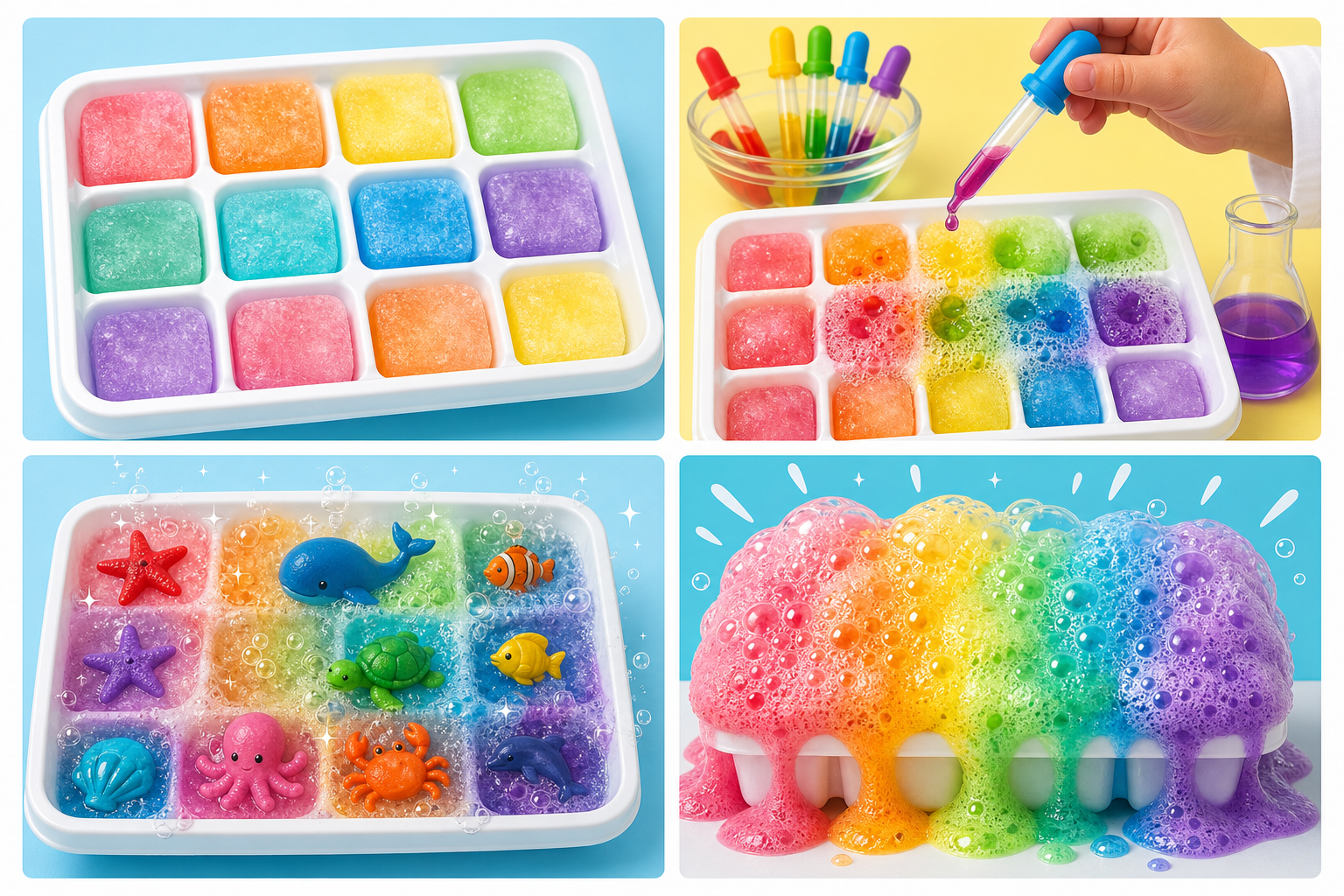
Illustrated summer wow card set for Fizzy Ice Rescue.
1. Freeze the surprise
Hide tiny objects in colored baking soda ice cubes before the lesson begins.
2. Drop and fizz
Children squeeze vinegar onto the cubes and watch the bubbling start right away.
3. Rescue mission
As the cubes melt, children pull out treasures and compare which ones escape first.
4. Rainbow mess, good science
The tray turns bright and foamy while kids practice close observation and cause-and-effect language.
🔬 Let’s Get Started
Step 1 — Prep the rescue tray
Freeze colored baking soda ice cubes with tiny treasures inside. Place them in a shallow tray right before the lesson.
Step 2 — Launch the mystery
Ask: “How could we rescue the hidden treasures without smashing the ice?” Let children share quick guesses.
Step 3 — Start the fizz
Give each child a pipette, dropper, or spoonful of vinegar and let them drip it onto the cubes.
Step 4 — Observe what changes
Pause to notice bubbles, sounds, color changes, melting, and how the treasures start to peek through.
Step 5 — Sort the rescued items
Place the revealed objects into simple groups like shells, colors, or “rescued first / rescued later.”
Step 6 — Wrap up the wow
Ask children to explain what helped the ice break apart and which part of the rescue felt most surprising.
💬 Discussion Questions
What did you see when the vinegar touched the ice?Look for fizzing, bubbling, color spreading, melting, and treasures showing up.
Did the treasure come out all at once or little by little?Children should notice that the rescue happened step by step as the cubes melted.
What do you think helped the ice break apart?Accept “the bubbles,” “the vinegar,” or “the fizz reaction” in child-friendly language.
🚀 Keep the Wow Going
Freeze a second batch with different colors or bigger treasures and compare which cubes seem to take longer to rescue.
👩🏫 Parent Notes
- Lean into the language: use words like surprise, notice, compare, and tell me what changed.
- Keep it short: kindergarten attention stays stronger when the setup explanation is brief and the doing starts fast.
- Photograph the middle: the most useful parent-photo moment is usually when the reaction is happening, not just before it starts.
📝 Student Page
Name: ________________________________ Date: ________________
Part 1 — My Prediction
I think this experiment will __________________________________.
Part 2 — What I Observed
| What I noticed | My words or drawing |
|---|
| At the beginning | |
| During the wow moment | |
| At the end | |
Part 3 — Quick Science Thinking
Draw the treasure you rescued and circle what you noticed: bubbles / color change / melting / surprise.
Draw or write here ✏️
🔑 Parent Answer Key
Detach note: student wording may be simple. The goal is noticing, retelling, and connecting one change to the experiment.
What success looks like
- Children should mention fizzing or bubbling.
- A strong response connects the bubbles to the ice breaking apart.
- Any clear drawing or oral description of the rescue counts as success.
Fast debrief sentence
“We saw a big change because the ingredients and setup made something visible happen right in front of us.”
☀️
Preview unlocked. Full lesson starts below.
You can read the overview, materials, and visual cards here. Unlock the full 4-week K Summer Wow Series for $20 to get all four complete lessons, printable student pages, and answer keys.