Free sample focus: Set up light and dark color patches in sun and shade, then turn touch-safe observations into a real comparison.
Showcase sample
Set up light and dark color patches in sun and shade, then turn touch-safe observations into a real comparison.
Sunlight warms Earth’s surfaces, and some surfaces feel warmer than others after sitting in the Sun.
📋 NGSS Alignment: K-PS3-1 — Make observations to determine the effect of sunlight on Earth’s surface.
🎯 Learning Objective
Students will compare light and dark paper in sunlight and shade to observe how sunlight can warm surfaces.
💡 The Big Idea
Sunlight warms Earth’s surfaces, and some surfaces feel warmer than others after sitting in the Sun.
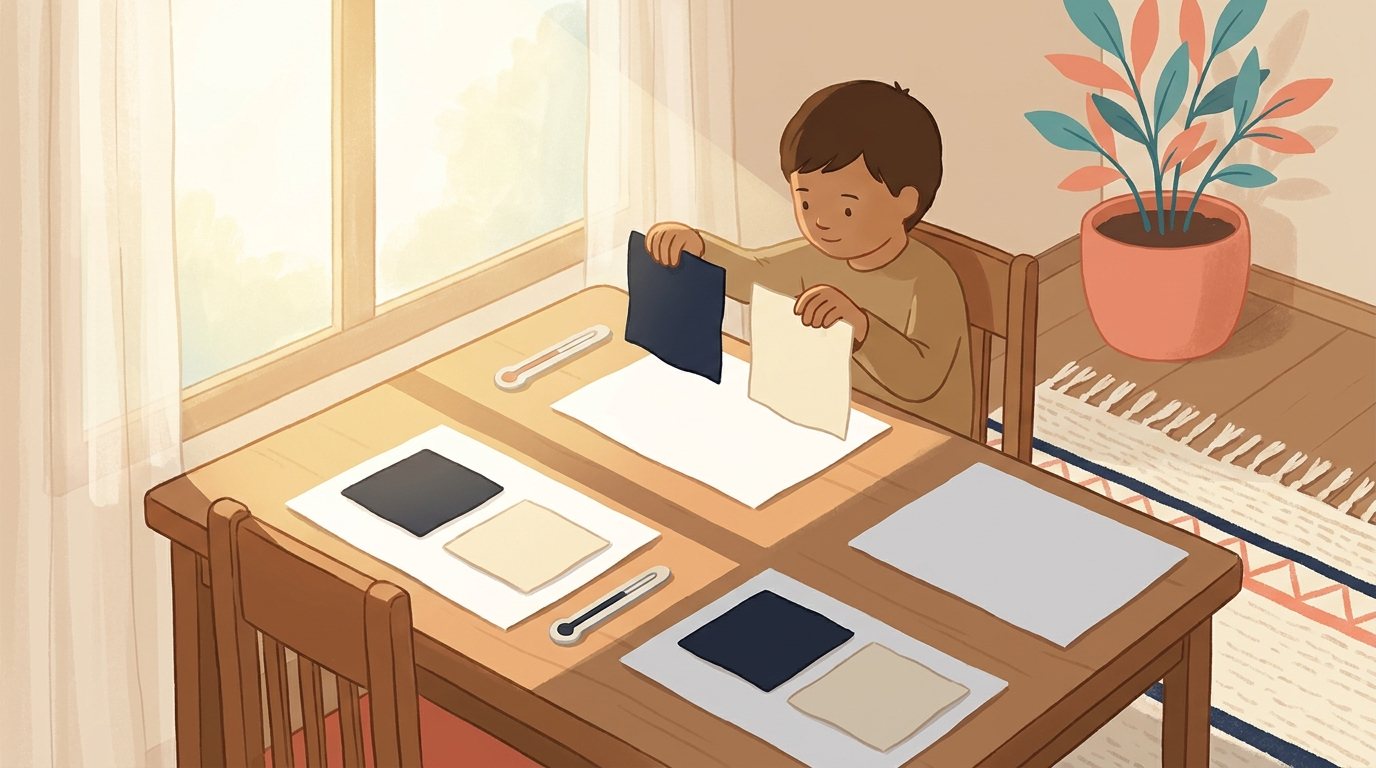
Sun and shade comparison
The visual target is simple: same place, same time, different surfaces. Students notice warmth patterns instead of guessing.
Compare sunny and shady spots
Notice light vs dark surfaces
Use safe touch observations
🔬 Key Vocabulary
sunlightsurfacewarmcoolshadeobserve
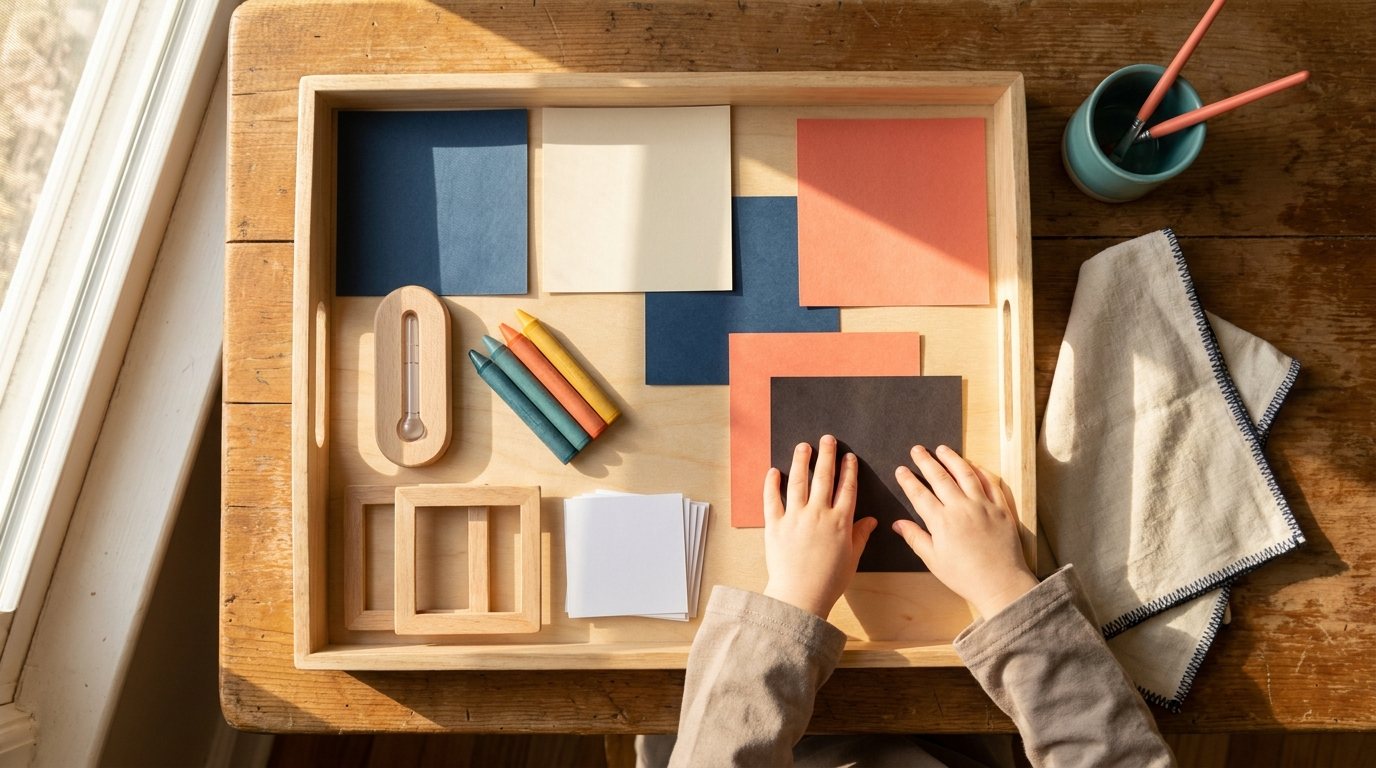
📦 Materials
Black or dark paper
White or light paper
Sunny window or safe outdoor spot
Shady spot
Timer
Crayon or pencil
🧪 Investigation
Step 1 — Predict Ask which paper will feel warmer after sitting in the Sun.
Step 2 — Place papers Put one dark and one light paper in the same sunny place. Put matching papers in shade if possible.
Step 3 — Wait safely Wait 5–10 minutes. Remind students to touch gently and never stare at the Sun.
Step 4 — Touch-test carefully Use the back of a finger for a quick touch. Record warmer / cooler.
Step 5 — Sort the evidence Compare sunny papers with shady papers.
Step 6 — Explain Students say how sunlight changed the surfaces they tested.
💬 Discussion Questions
Which paper felt warmest?Use evidence from the activity in your answer.
How did shade change the result?Use evidence from the activity in your answer.
Why do scientists touch-test carefully?Use evidence from the activity in your answer.
🚀 Extension
Try this next: Ask your child to repeat one part of the test tomorrow or with one changed material, then explain what stayed the same and what changed.
👩🏫 Parent/Teacher Notes
At-home win: This free sample is complete enough to teach today and polished enough to show how a full Little Lab Coats lesson feels.
Evidence move: Press students to point to a mark, drawing, comparison, or observation before they explain.
Family-friendly pacing: If attention is short, do steps 1–4 today and the worksheet discussion later.
A strong answer says the sunny surface warmed more than the shady surface, often with dark paper feeling warmest. Student should cite what they touched/observed.
Student names the important observation or test result.
Student uses unit vocabulary in a simple sentence.
Student connects evidence to the science idea instead of guessing.