Kindergarten Free Unit Sample — K-LS1 Unit 3 · Animal Needs
📚 Grade: Kindergarten🔬 Domain: Life Science⏱️ Time: 30–45 minutes
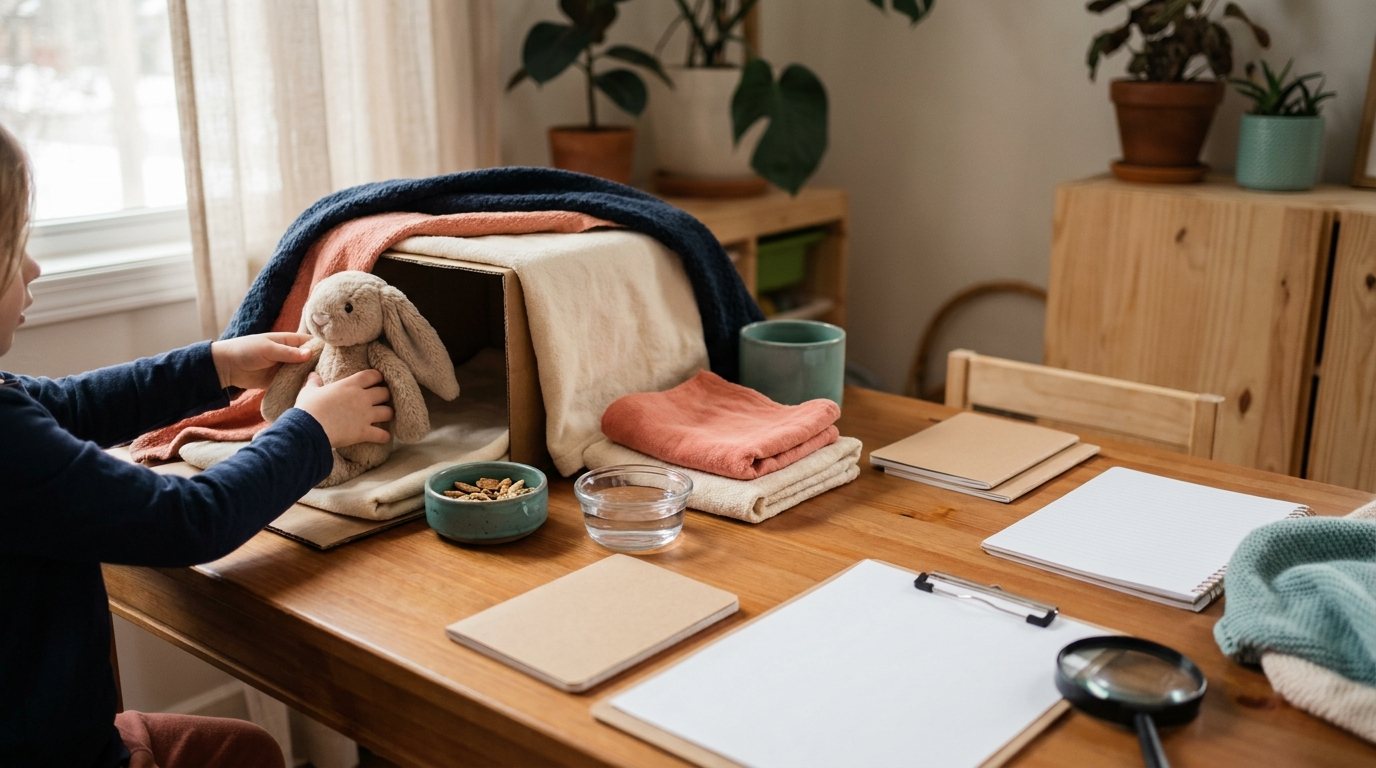
Free sample focus: Inspect a pretend animal home for food, water, air, and shelter so “animal needs” becomes something children can see.
Showcase sample
Inspect a pretend animal home for food, water, air, and shelter so “animal needs” becomes something children can see.
Animals survive when their basic needs are met in the places they live.
📋 NGSS Alignment: K-LS1-1 — Use observations to describe patterns of what animals need to survive.
🎯 Learning Objective
Students will inspect pretend animal homes and decide whether each animal has food, water, air, and shelter.
💡 The Big Idea
Animals survive when their basic needs are met in the places they live.
Animal-home checklist
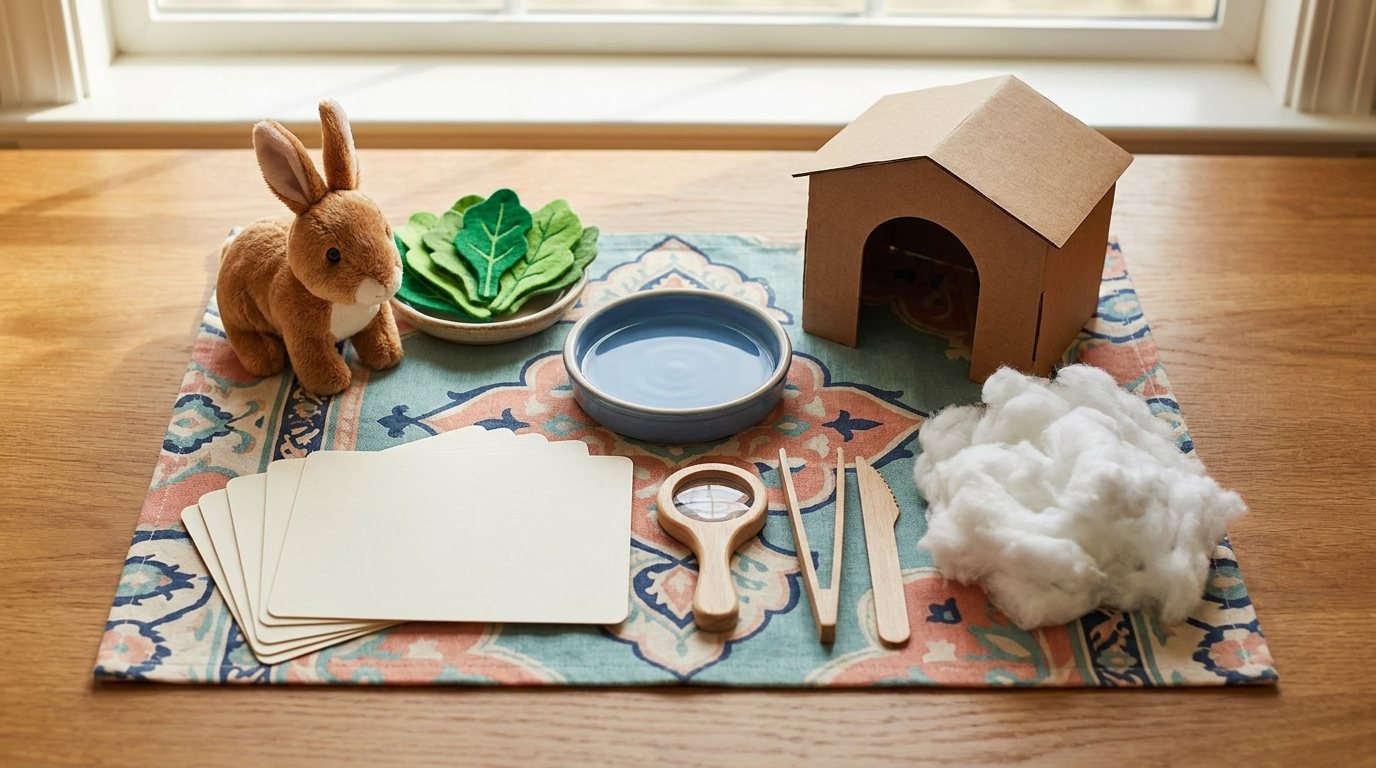
A cozy habitat scene turns the abstract word habitat into a concrete checkup: what does the animal need, and is it there?
Look for food, water, air, shelter
Match needs to habitat parts
Explain one missing need
🔬 Key Vocabulary
animalneedfoodwaterairshelter
📦 Materials
Toy animal or animal picture
Small box, towel, or paper “home”
Blue paper or cup for water symbol
Pretend food card
Crayons
Checklist worksheet
🧪 Investigation
Step 1 — Choose an animal Pick a toy animal or picture and name where it might live.
Step 2 — Build a pretend home Use a box, towel, or drawing to create a simple habitat.
Step 3 — Check food Add or draw one food the animal could eat.
Step 4 — Check water and air Add a water symbol and talk about breathing.
Step 5 — Check shelter Add a hiding/resting spot.
Step 6 — Explain the checkup Students tell which need was easiest to forget and why it matters.
💬 Discussion Questions
What does your animal eat?Use evidence from the activity in your answer.
Where can it get water?Use evidence from the activity in your answer.
How does shelter help an animal stay safe?Use evidence from the activity in your answer.
🚀 Extension
Try this next: Ask your child to repeat one part of the test tomorrow or with one changed material, then explain what stayed the same and what changed.
👩🏫 Parent/Teacher Notes
At-home win: This free sample is complete enough to teach today and polished enough to show how a full Little Lab Coats lesson feels.
Evidence move: Press students to point to a mark, drawing, comparison, or observation before they explain.
Family-friendly pacing: If attention is short, do steps 1–4 today and the worksheet discussion later.