📚 Grade: Grade 1🔬 Domain: Life Science⏱️ Time: 30–45 minutes
Free sample focus: Compare parent-and-offspring cards to spot shared traits, differences, and evidence for family resemblance.
Showcase sample
Compare parent-and-offspring cards to spot shared traits, differences, and evidence for family resemblance.
Young animals and plants often look like their parents, but they are not exact copies.
📋 NGSS Alignment: 1-LS3-1 — Make observations to construct an evidence-based account that young plants and animals are like, but not exactly like, their parents.
🎯 Learning Objective
Students will compare parent and offspring picture cards to identify shared traits and individual differences.
💡 The Big Idea
Young animals and plants often look like their parents, but they are not exact copies.
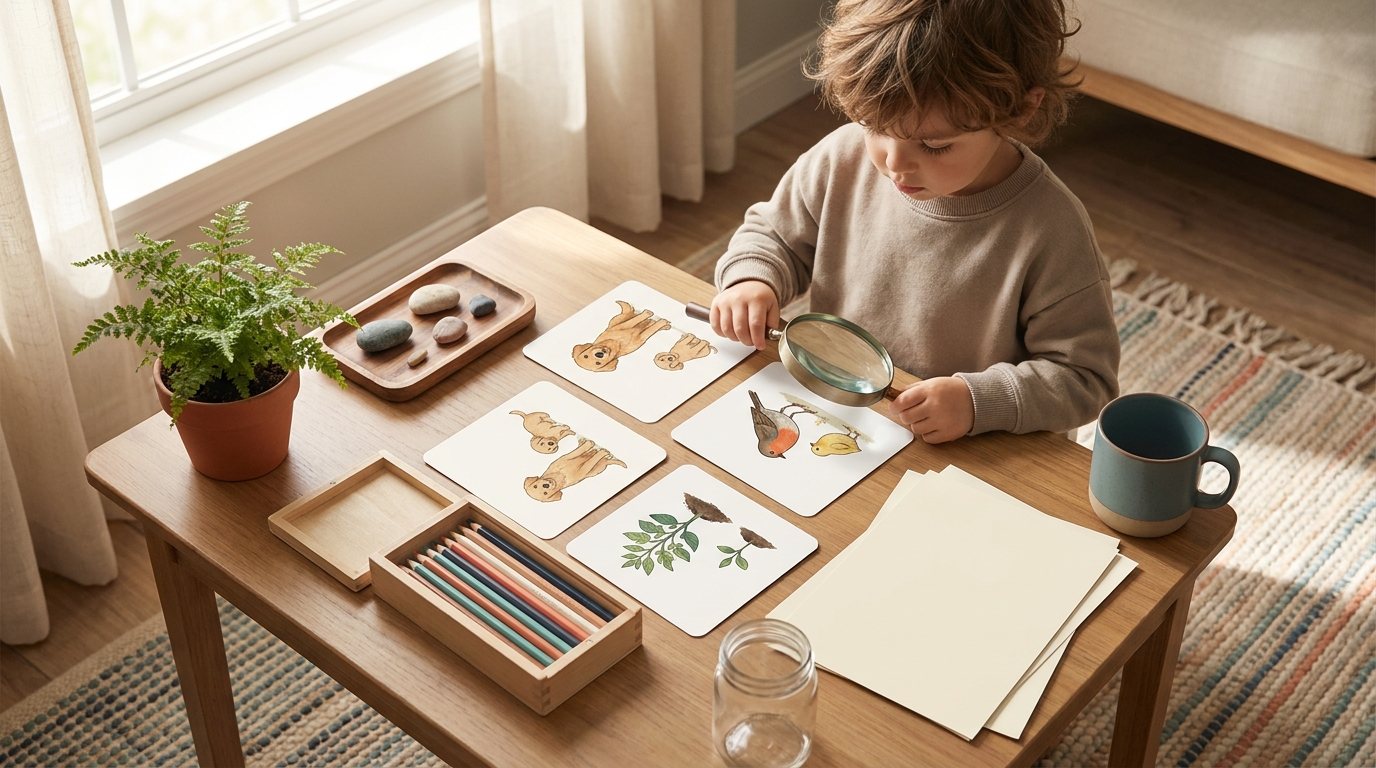
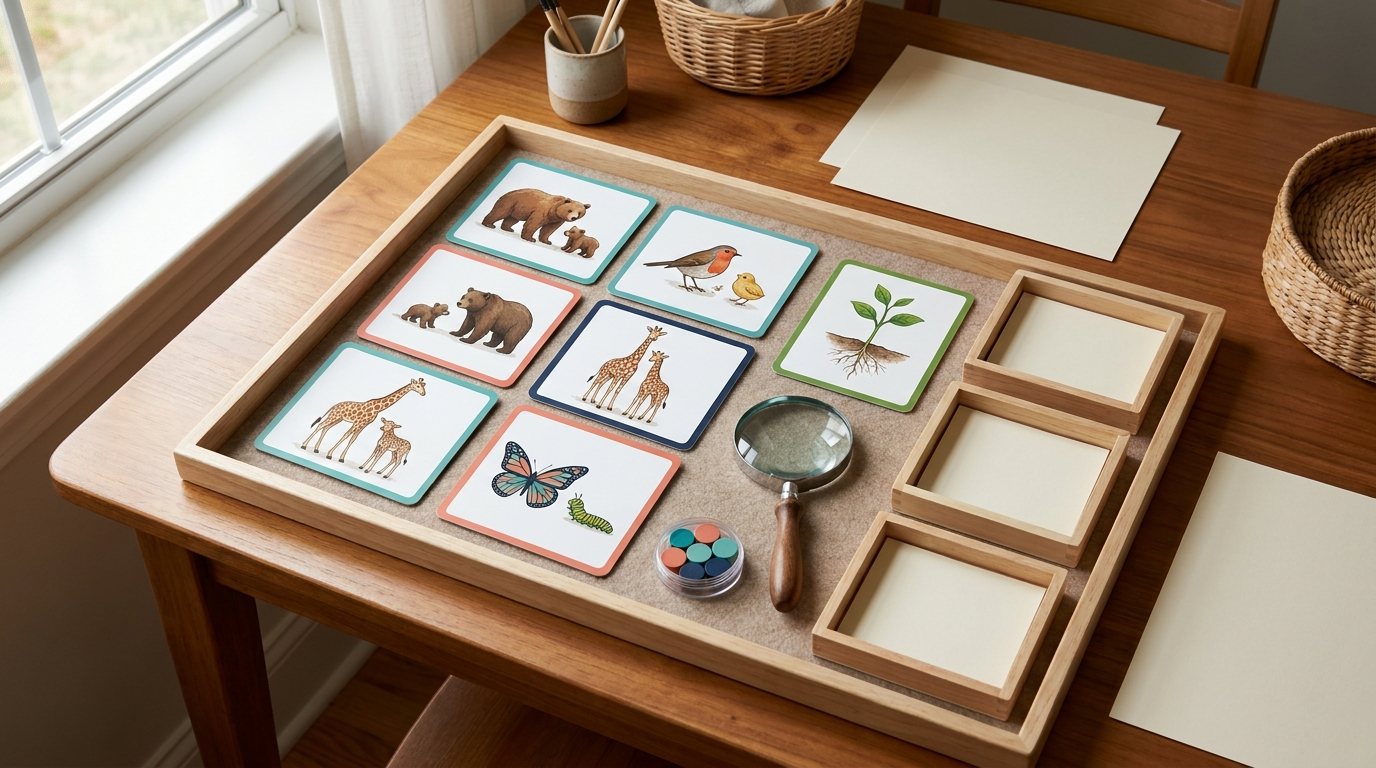
Shared-trait detective board
The parent/offspring cards make the evidence visible without implying every baby is a perfect copy of its parent.
Notice visible traits
Compare parent and offspring
Use evidence, not guessing
🔬 Key Vocabulary
parentoffspringtraitsimilardifferentevidence
📦 Materials
This lesson page printed or open on a screen
Built-in animal family cards below
Crayons or colored pencils
Scissors optional if you want to cut the cards apart
Worksheet
Family photo optional only if comfortable
🐾 Animal Cards for This Lesson
Use these cards for the investigation and worksheet. Students can point to the cards on screen, or print this page and cut them apart. The goal is to notice evidence: young animals are like their parents, but not exactly the same.
Animal family 1 — Dogs
🐕
Parent dog
Brown fur
Floppy ears
White chest patch
Long tail
🐶
Puppy
Brown fur
Floppy ears
Small white chest patch
Shorter body
Detective clue: Same fur color and ear shape; different size.
Animal family 2 — Ducks
🦆
Parent duck
Flat bill
Webbed feet
Smooth feathers
Larger body
🐥
Duckling
Small flat bill
Webbed feet
Fluffy down
Smaller body
Detective clue: Same bill and feet; different body covering and size.
Bonus plant family — Sunflowers
🌻
Parent plant
Tall stem
Green leaves
Yellow petals
Large flower head
🌱
Young plant
Green stem
Small leaves
No flower yet
Much shorter
Detective clue: Same green plant parts; different size and flowers.
Extra challenge — Rabbits
🐇
Parent rabbit
Long ears
Soft fur
Big back feet
Larger body
🐰
Baby rabbit
Shorter long ears
Soft fur
Small back feet
Smaller body
Detective clue: Same ears and fur; different size.
Print tip: keep cards on the page for pointing, or cut each rounded rectangle apart for sorting.
🧪 Investigation
Step 1 — Choose Animal family 1 Look at the parent dog and puppy cards above.
Step 2 — Circle or point to shared traits Find color, body covering, ear shape, foot shape, bill shape, or pattern similarities on the built-in cards.
Step 3 — Mark differences Find a difference such as size, fluffiness, flower, spots, or shade.
Step 4 — Compare Animal family 2 Repeat with the parent duck and duckling cards. If your child wants more practice, use the rabbit cards or the bonus plant family.
Step 5 — Sort claims Decide which claims are supported by picture evidence.
Step 6 — Write account Student completes a claim-evidence sentence.
💬 Discussion Questions
What trait does the offspring share with the parent?Use evidence from the activity in your answer.
What is one difference?Use evidence from the activity in your answer.
How do you know from the picture evidence?Use evidence from the activity in your answer.
🚀 Extension
Try this next: Ask your child to repeat one part of the test tomorrow or with one changed material, then explain what stayed the same and what changed.
👩🏫 Parent/Teacher Notes
At-home win: This free sample is complete enough to teach today and polished enough to show how a full Little Lab Coats lesson feels.
Evidence move: Press students to point to a mark, drawing, comparison, or observation before they explain.
Family-friendly pacing: If attention is short, do steps 1–4 today and the worksheet discussion later.