📚 Grade: Grade 1🔬 Domain: Life Science⏱️ Time: 30–45 minutes
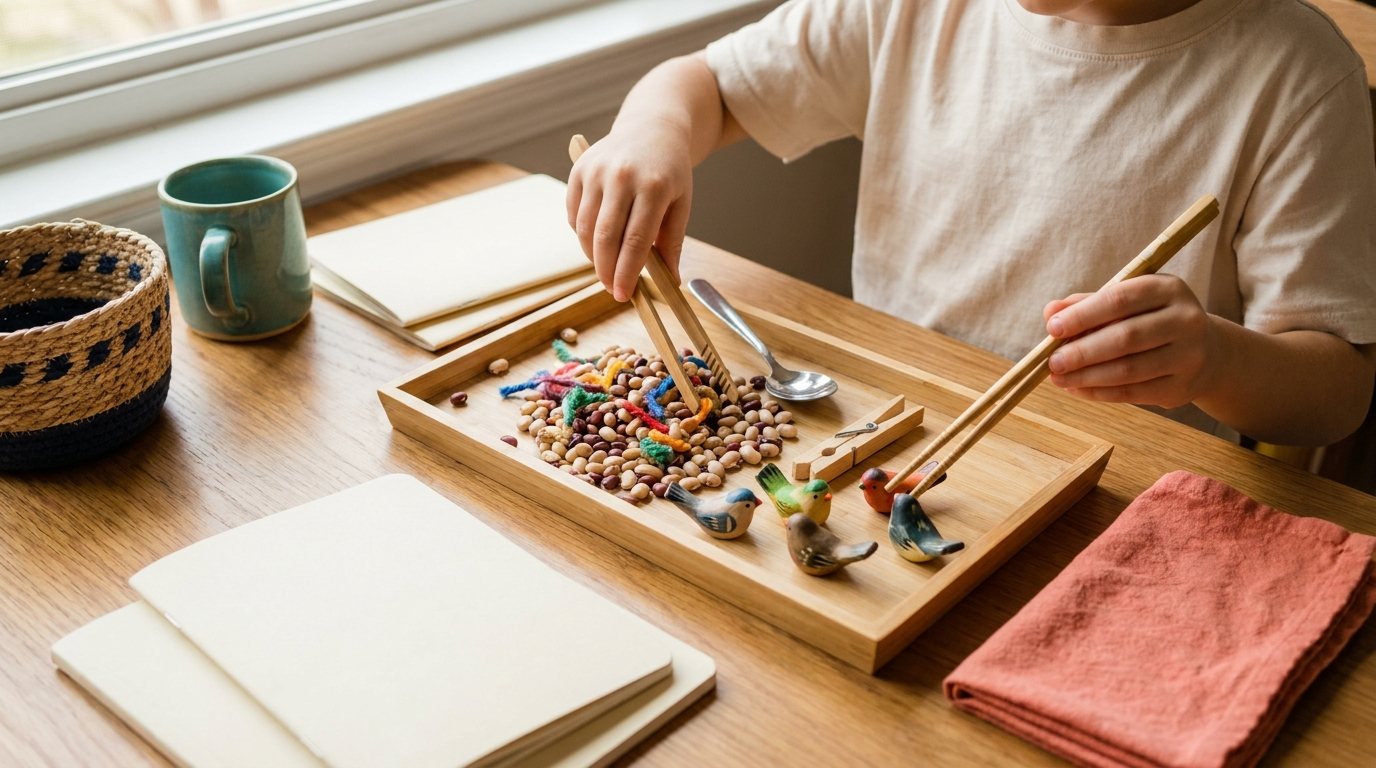
Free sample focus: Use spoon, tweezer, and clothespin “beaks” to discover how structure changes what a tool can pick up.
Showcase sample
Use spoon, tweezer, and clothespin “beaks” to discover how structure changes what a tool can pick up.
Animal body parts have shapes that help them do jobs, and engineers can copy helpful structures.
📋 NGSS Alignment: 1-LS1-1 — Use materials to design a solution to a human problem by mimicking how plants or animals use external parts.
🎯 Learning Objective
Students will compare simple “beak tools” and use evidence to explain how structure helps animals get food.
💡 The Big Idea
Animal body parts have shapes that help them do jobs, and engineers can copy helpful structures.
Beak shape helps the job
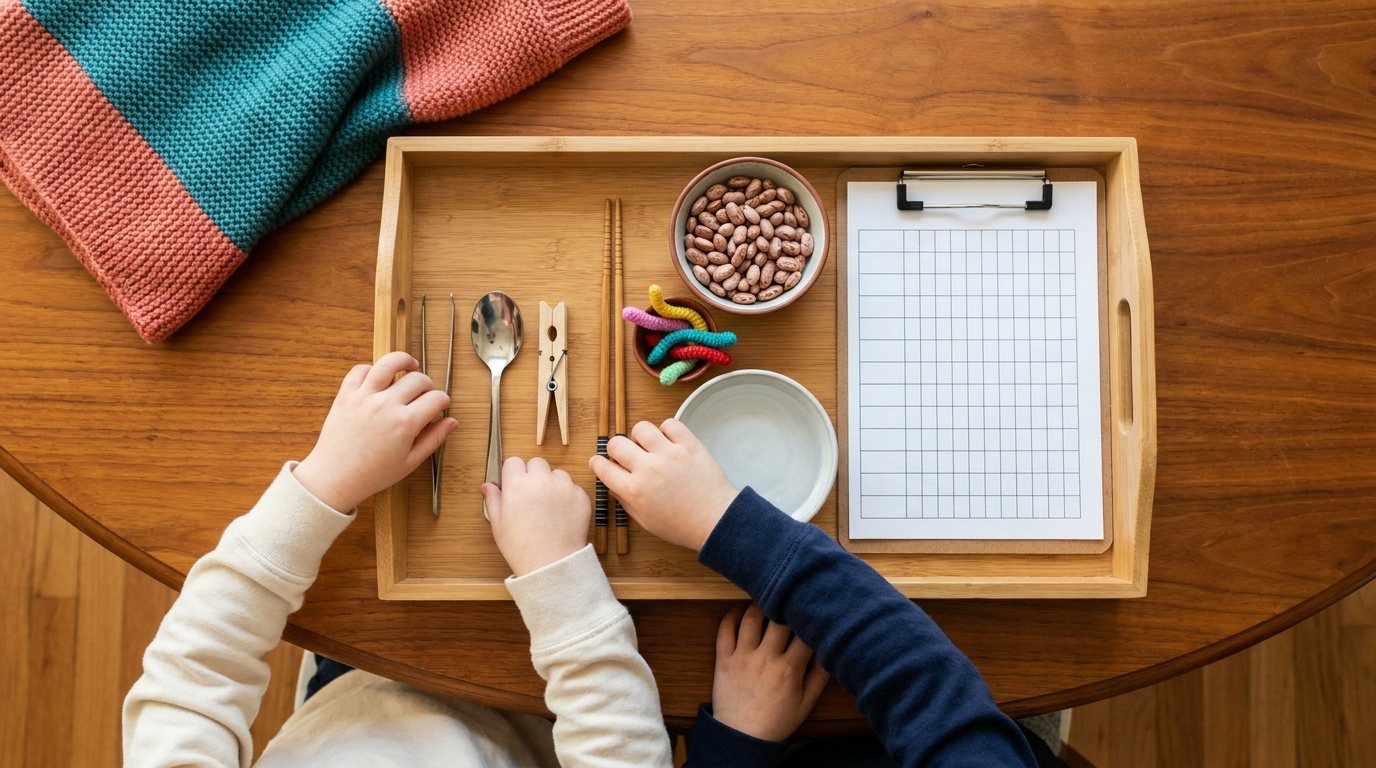
The tool-test visual keeps the science concrete: each beak shape is matched to the kind of food job it does best.
Compare beak-like tools
Match shape to food job
Explain which structure helped
🔬 Key Vocabulary
structurefunctionbeaktoolmimicevidence
📦 Materials
Spoon
Tweezers or clothespin
Straw or chopsticks
Small snacks or paper “food” pieces
Cup or plate
Worksheet
🧪 Investigation
Step 1 — Meet the challenge A bird needs to pick up different foods: seeds, worms, and nectar models.
Step 2 — Choose tools Use spoon, tweezers, and straw/chopsticks as pretend beaks.
Step 3 — Test one food Try picking up round paper “seeds” with each tool.
Step 4 — Test another food Try string “worms” or water drops/beans with the tools.
Step 5 — Compare structure and job Circle which tool worked best for each food.
Step 6 — Engineer connection Students design a pretend tool inspired by the best beak.
💬 Discussion Questions
Which tool picked up seeds best?Use evidence from the activity in your answer.
Why did one shape work better than another?Use evidence from the activity in your answer.
How could a human tool copy an animal part?Use evidence from the activity in your answer.
🚀 Extension
Try this next: Ask your child to repeat one part of the test tomorrow or with one changed material, then explain what stayed the same and what changed.
👩🏫 Parent/Teacher Notes
At-home win: This free sample is complete enough to teach today and polished enough to show how a full Little Lab Coats lesson feels.
Evidence move: Press students to point to a mark, drawing, comparison, or observation before they explain.
Family-friendly pacing: If attention is short, do steps 1–4 today and the worksheet discussion later.