Free sample focus: Trace a shadow twice and watch daytime sky patterns appear right on the page.
Showcase sample
Trace a shadow twice and watch daytime sky patterns appear right on the page.
The Sun’s position in the sky appears to change, and shadows can help us observe that daytime pattern.
📋 NGSS Alignment: 1-ESS1-1 / 1-ESS1-2 — Use observations of the Sun, Moon, and stars to describe patterns.
🎯 Learning Objective
Students will trace an object’s shadow at two times and use evidence to notice that shadows change during the day.
💡 The Big Idea
The Sun’s position in the sky appears to change, and shadows can help us observe that daytime pattern.
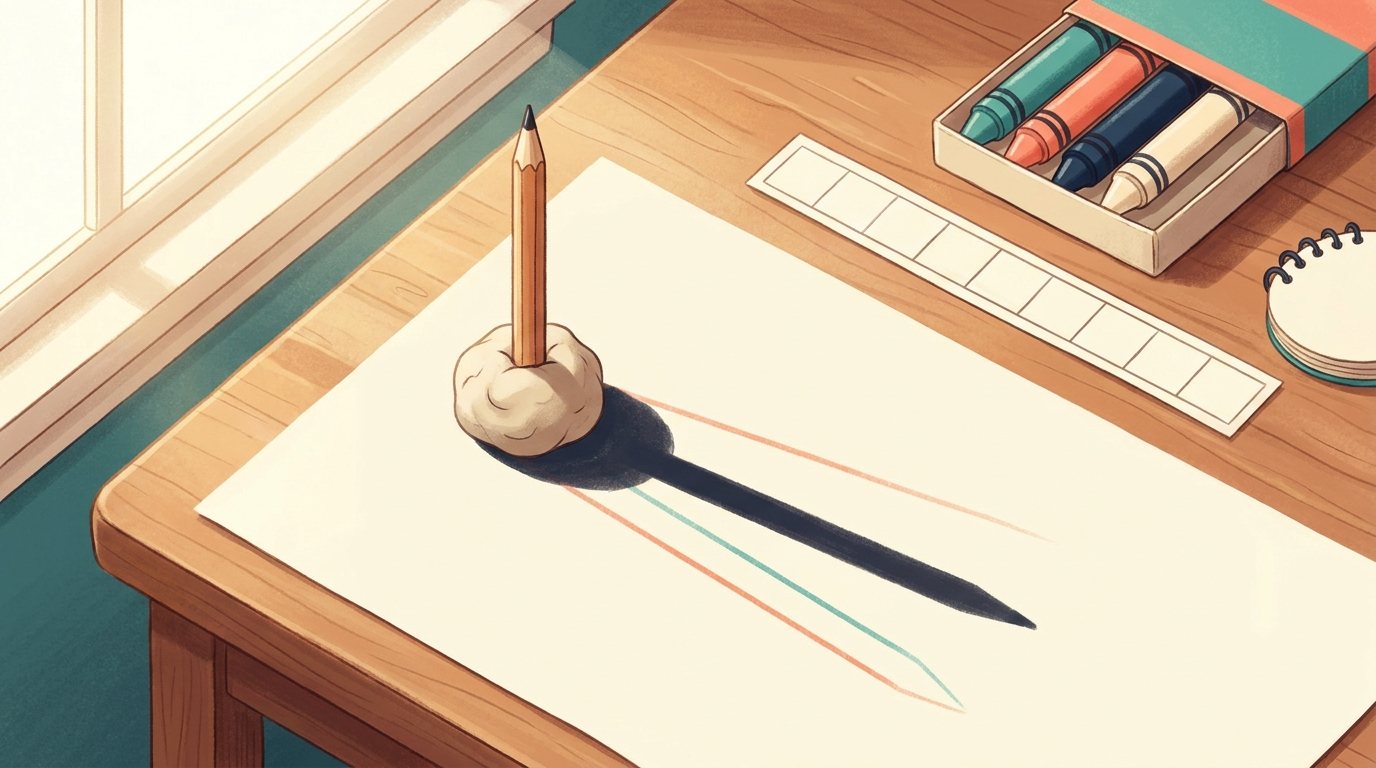
Two-time shadow comparison
The shadow visual gives students a before/after anchor: same object, two times, different shadow direction or length.
Trace a morning shadow
Trace a later shadow
Explain the pattern evidence
🔬 Key Vocabulary
Sunshadowpatternobservedirectiondaytime
📦 Materials
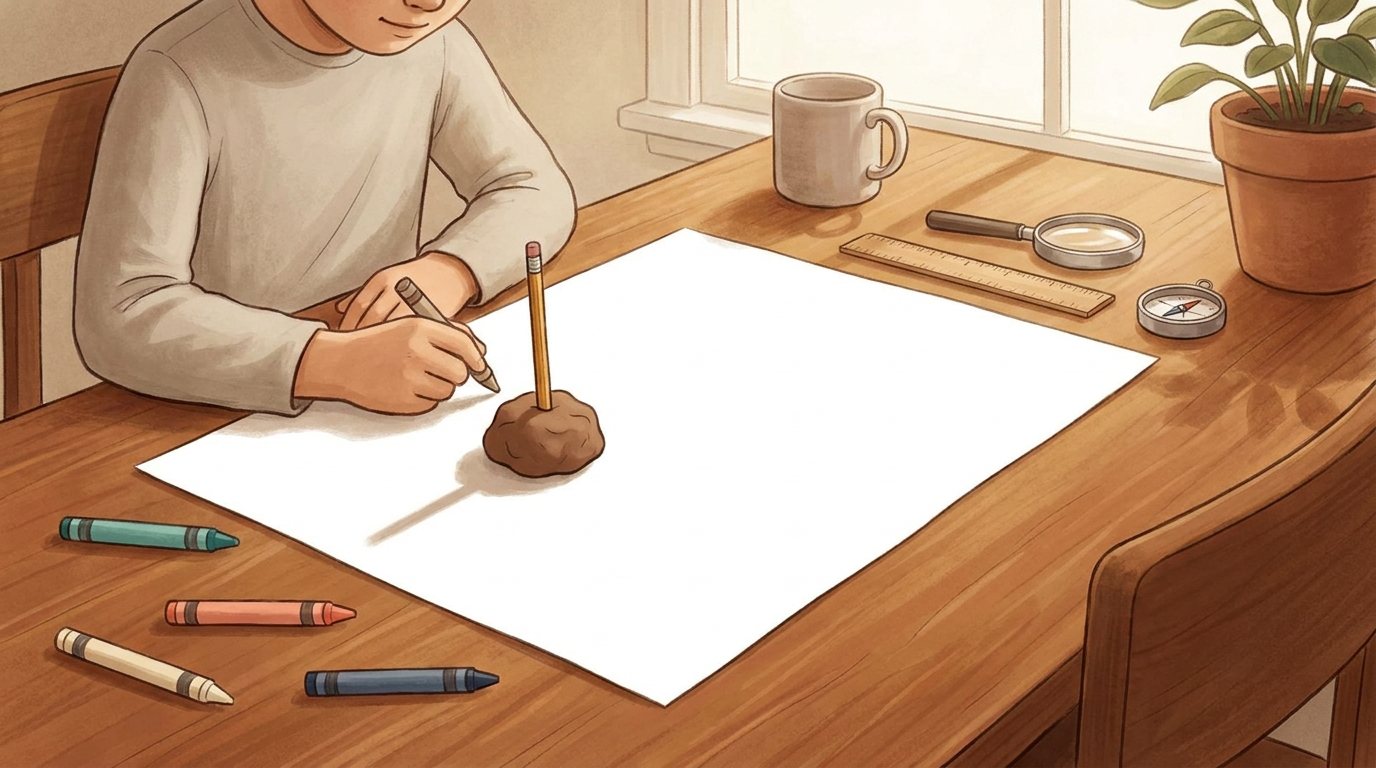
Toy or pencil standing upright
Paper
Sunny spot
Crayon
Clock or timer
Tape
🧪 Investigation
Step 1 — Set the marker Stand a toy or pencil on paper in a sunny spot.
Step 2 — Trace shadow 1 Trace the shadow and label the time.
Step 3 — Wait Return later the same day if possible.
Step 4 — Trace shadow 2 Trace the new shadow and label the time.
Step 5 — Compare Look for changes in length or direction.
Step 6 — Explain pattern Student says how the shadow evidence shows daytime change.
💬 Discussion Questions
How did the shadow change?Use evidence from the activity in your answer.
What stayed the same?Use evidence from the activity in your answer.
Why do we label the time?Use evidence from the activity in your answer.
🚀 Extension
Try this next: Ask your child to repeat one part of the test tomorrow or with one changed material, then explain what stayed the same and what changed.
👩🏫 Parent/Teacher Notes
At-home win: This free sample is complete enough to teach today and polished enough to show how a full Little Lab Coats lesson feels.
Evidence move: Press students to point to a mark, drawing, comparison, or observation before they explain.
Family-friendly pacing: If attention is short, do steps 1–4 today and the worksheet discussion later.